Threat Classification: Variable — Context Dependent
Recommendation: Approach only with preparation, respect, and a willingness to be changed
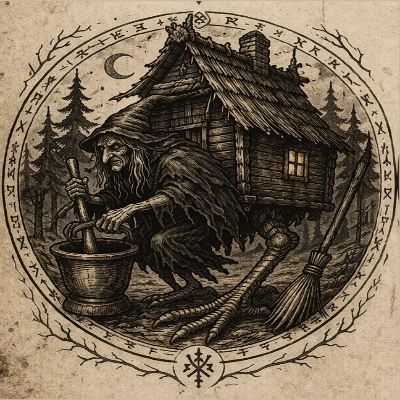
An ancient, shape-shifting forest crone bound to a living hut on chicken legs, Baba Yaga embodies the wild, liminal boundary between worlds, moving through the deep woods with elemental, nature-bound magic.
| Form / Type | Often appears as a triple-formed woman, each face gazing in a different direction—past, present, and unseen futures |
| Physical Appearance | Cloaked in flowing midnight robes that ripple like smoke even in still air |
| Dwelling | A crooked hut standing on chicken legs, capable of movement and rotation; often surrounded by a fence of bones or skulls |
| Mobility | Travels in a mortar, propelling herself with a pestle; sweeps away her tracks with a broom made of branches |
| Environmental Aura | The forest bends around her presence—trees creak, animals fall silent or obey, and paths become disorienting |
| Domain | Deep forest edges and thresholds—places where the boundary between worlds (life/death, human/spirit) is thin |
| Associated Creatures | Carries twin or triple torches whose flames emit no heat, only revelation |
| Magical Expression | Commands elemental and primal forest forces; magic feels ancient, organic, and inseparable from nature itself |
| Age / Presence | Timeless; represents ancestral memory, cyclical time, and the enduring will of the wild rather than a fixed lifespan |
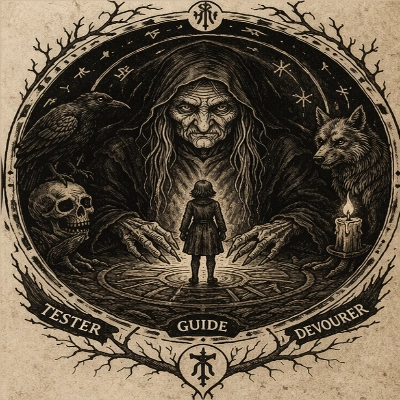
A morally ambiguous guardian of thresholds, she tests those who seek her out—rewarding the clever and respectful while punishing the foolish—acting as both devourer and initiator guided by ancient, non-human laws.
| Disposition | Deeply ambiguous—can be guide, devourer, or tester depending on circumstance and behavior of those who encounter her |
| Moral Alignment | Not bound by human morality; operates on ancient, often harsh but internally consistent laws |
| Core Archetype | Guardian of thresholds; initiator of transformation through trials, fear, or sacrifice |
| Threat Nature | Extremely powerful but judicial rather than purely predatory—danger arises from failing her tests or disrespecting her domain |
| Interaction Style | Engages primarily with the lost, the desperate, or children; presents riddles, tasks, or moral trials |
| Tests & Trials | Challenges individuals to prove courage, humility, cleverness, or respect for natural/spiritual order |
| Role in Myth | Acts as both obstacle and enabler—those who survive her trials often gain power, knowledge, or passage |
| Relationship to Humans | Views humans as transient and often foolish, yet occasionally worthy of guidance or transformation |
| Symbolism | Embodies the wild unknown, the inevitability of change, and the harsh wisdom of nature and time |
Hekate originates from ancient mythic traditions where she was revered as a liminal deity—guardian of thresholds, crossroads, and transitions. Unlike many gods bound to sky or earth, she exists between states: life and death, light and shadow, knowledge and oblivion. Over centuries, her worship evolved from honored protector to feared mistress of witchcraft and spirits. In hidden traditions, she remains a guide for seekers of arcane wisdom, invoked at boundaries both physical and metaphysical. Her symbols—keys, torches, and hounds—persist across cultures, marking her as a constant presence wherever paths converge and choices must be made..
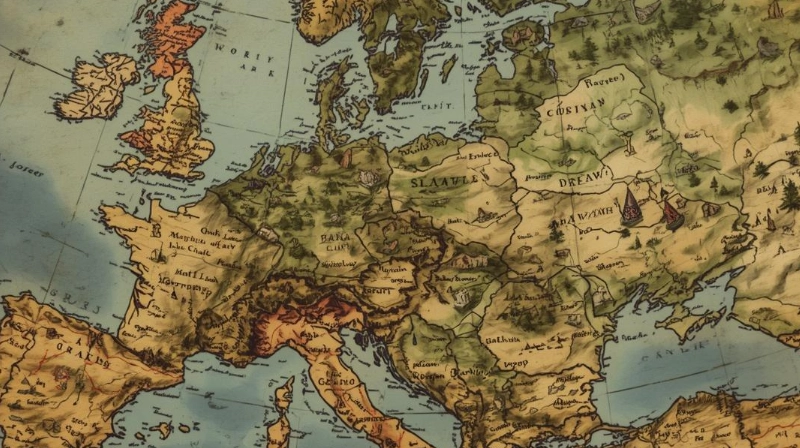
Baltic fragments hint at kinship with older forest hags, while Finno-Ugric parallels suggest a more unsettling theory: Baba Yaga may not be a singular entity, but rather a mantle—an ancient office assumed, relinquished, and inherited across epochs.
Ježibaba in Czech regions
Baba Roga among South Slavs
Mat’ Lesa (Mother of the Wood) in Carpathian accounts

Baba Yaga cannot be placed neatly on any moral scale. In the same story, she may appear cruel, generous, or utterly indifferent, shifting roles without explanation. Some who meet her are devoured. Others are guided, armed with knowledge or gifts that change their fate. Because of this, many scholars argue she is not driven by malice at all, but by trial. .She behaves like an examiner standing at a threshold, weighing those who come before her. She tests patience, humility, and awareness, and only then decides whether aid is deserved. What is clear is that her movements follow moments of change. She is most active at twilight, during seasonal turning points, and at times when the world itself feels unstable—first frost, sudden thaw, endings and beginnings. Baba Yaga exists between states, never fully anchored to one role or time. She is not chaos, but transition made flesh, appearing where certainty ends and something else must begin.
They say that at the hour when night forgets itself—when even the moon hesitates behind a veil of drifting cloud—she walks.
Hekate does not arrive as other beings do. She is not summoned by sound alone, nor bound by circle or sigil. Instead, she seeps into existence where decisions hang unresolved—at the crossroads of the living world and the unseen. Travelers speak of a sudden stillness, of wind dying mid-breath, of shadows lengthening without cause. Then come the torches: pale flames blooming in the distance, moving though no hand seems to carry them.
And then she is there.
Three faces, or one shifting endlessly—none can agree. Some recall a young woman with knowing eyes; others, a crone whose gaze weighs heavier than stone. A few claim both are true at once. Her presence bends the world slightly out of alignment, as though reality itself acknowledges her authority and yields.
She does not ask questions. She already knows.
Those who meet her at the crossroads often stand at the brink of transformation—exile, ambition, despair, or revelation. To them, she offers neither salvation nor doom, but a choice sharpened to its purest edge. Her voice is soft, yet it carries through bone and memory alike, echoing with truths one cannot unknow.
The hounds come next. Silent at first, then circling. Their eyes gleam like distant stars, watching not the body, but the soul beneath it. They are her witnesses, her judges, and perhaps her companions in an eternity beyond mortal grasp.
Some kneel. Some run. Some attempt bargains.
Few leave unchanged.
For Hekate is not merely a keeper of doors—she is the understanding that every door leads somewhere irreversible. To stand before her is to confront the weight of one’s own path, stripped of illusion. And whether she grants passage or denies it, the result is always the same:
You will never again be who you were before you met her.
The House That Walks and Watches
Hekate is rarely alone, though her solitude feels absolute. Most commonly, she is accompanied by her hounds—creatures not entirely of flesh, nor fully of spirit. These beings shift between visibility and shadow, their forms flickering like dying embers. Legends claim they were once guardians of sacred thresholds, bound eternally to her service. Their howls are said to echo across dimensions, audible only to those standing at the brink of change or death.
Equally iconic are her keys. Forged of materials unknown—bone, star-metal, or crystallized shadow—they hang at her side or drift weightlessly around her form. Each key is believed to open something far greater than a door: sealed memories, forgotten realms, hidden truths, or even the boundaries between life and afterlife. No mortal has ever successfully taken one, though many have tried.
Her torches are perhaps her most paradoxical tools. Their flames illuminate what is hidden, yet often reveal truths too terrible or profound for the unprepared mind. They do not cast light in the conventional sense—instead, they expose essence. Under their glow, disguises fail, illusions unravel, and the soul stands bare.
As for her dwelling, no singular place can claim her. Hekate resides in thresholds themselves: crossroads, graveyards, abandoned doorways, and places where decisions linger unfinished. However, certain ancient sites—forgotten shrines, forest clearings, or ruined temples—are said to act as anchors for her presence. In these locations, offerings left at dusk sometimes vanish by dawn, replaced by subtle signs: a key-shaped mark in the dust, a lingering warmth, or the distant echo of unseen footsteps.
To encounter her domain is not to enter a place—but to step into a moment where the world holds its breath.
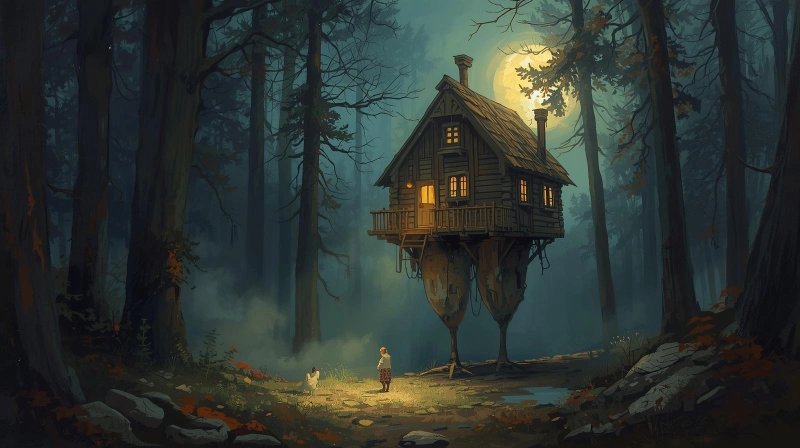
The hut is more than a home. It is a boundary. To stand before it is to stand at the edge of the known world, where the forest decides whether you may pass—or whether you will remain forever among the bones.
Though mobile, Baba Yaga appears intrinsically linked to her hut. Some accounts describe it as an extension of her will; others suggest it is a semi-autonomous entity.
A competing theory posits she is not bound to place at all, but to function—the eternal roles of guardian, devourer, and initiator into hidden knowledge.ior..
Baba Yaga’s power is vast, but it is never careless. The forest itself listens to her. Animals move at her command—wolves, birds, and unseen creatures carrying out her will as naturally as breathing. Storms gather or break apart when she travels, winds bending to her path as her mortar cuts through the sky. Distance means little to her; she can cross immense stretches of land in moments, appearing where she is needed—or feared—without warning. More dangerous still is what she knows. Baba Yaga is said to guard ancient knowledge of life and death, of endings and beginnings, of how one thing becomes another. These secrets are not taught freely. They are earned.
Yet for all her strength, Baba Yaga is bound by old laws she did not create and cannot break. If a guest approaches her properly—invoking the rites of hospitality, offering respect and sustenance—she must honor that bond, no matter her hunger. When she sets a task or poses a riddle, she is bound to see it through. The trial must be completed. The judgment must be delivered. She cannot simply abandon the process once it has begun.
This is the paradox at the heart of Baba Yaga. She is nearly unstoppable, yet never unbound. Her magic is immense, but it moves within strict, ancient rules. In this balance lies her true nature: not chaos, but order of a harsher kind—one that does not bend to desire, only to law.
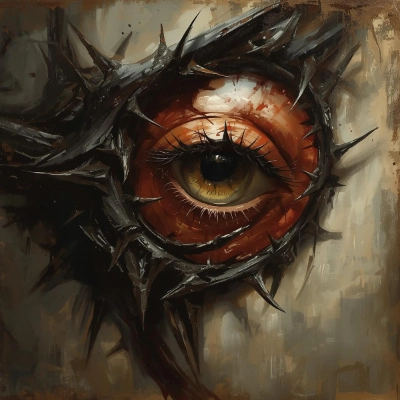
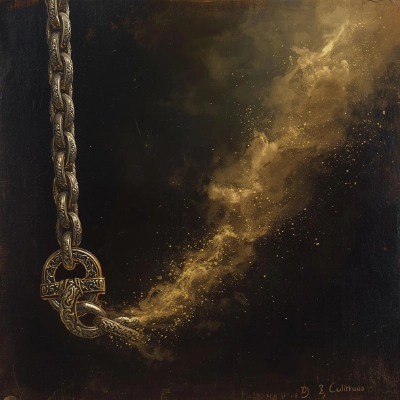
These rules form the paradox of her existence: her greatest power is matched by her greatest limitation.
Encounters and Recorded Testimonies
Those who survive an encounter with Baba Yaga tell similar stories, no matter where the tale is found. It usually begins with desperation. A child is cast out, an exile wanders too far, or a traveler loses the path and steps into the deep forest where the rules of the human world no longer apply. Somewhere beyond fear, the petitioner reaches her domain and makes a request—often for fire, food, protection, or knowledge. Baba Yaga listens, but she never answers directly. Instead, she sets tasks that appear impossible: sorting the unsortable, cleaning what cannot be cleaned, completing work meant to break the spirit. These trials are never about strength. They are traps for arrogance. Survival depends on cleverness, patience, humility, and sometimes help from unexpected allies—animals, enchanted objects, or quiet acts of kindness repaid. Those who boast, complain, or demand are destroyed without ceremony. Those who observe, listen, and adapt may be allowed to leave, changed but alive. In these testimonies, Baba Yaga does not chase or deceive. She waits. The choice to enter her world is always the final test—and once made, there is no turning back.
Encounters follow a consistent narrative structure:
- A desperate petitioner (often a child or exile) enters her domain
- A request for aid is made
- The subject is given impossible tasks
- Outcome hinges on cunning, humility, or external aid
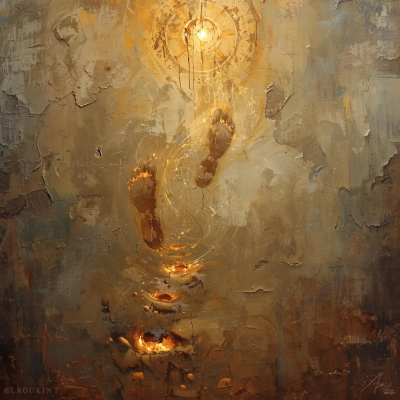
Signs of Presence
Indicators of Baba Yaga’s proximity include:
- Sudden silence among forest fauna
- The scent of smoke without visible flame
- Tracks that begin or end abruptly
- The distant creaking of timber in windless conditions
Reliable identification requires corroboration across multiple signs; isolated phenomena are in
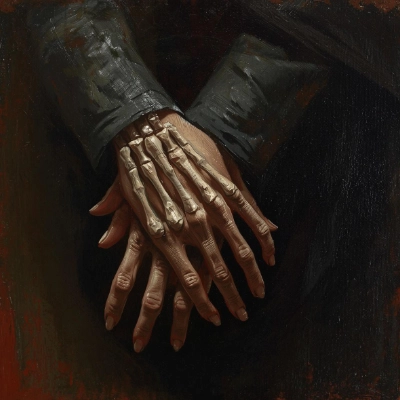
Baba Yaga does not actively seek human contact, yet she responds when approached.
Effective preliminaries include:
- Offerings of bread and salt
- Formal, respectful address
Bargains are possible—but exacting. Terms must be fulfilled precisely. Failure results in consumption—whether corporeal or metaphysical remains disputed.
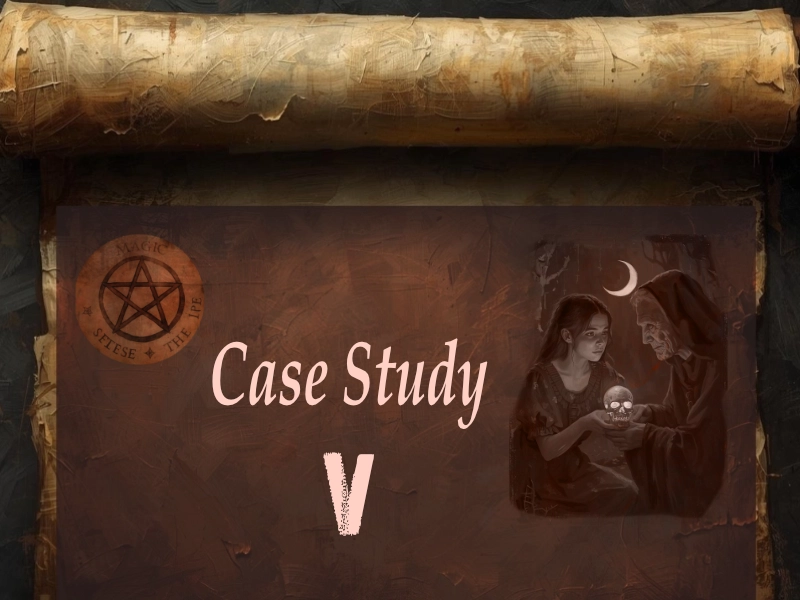
A traveling merchant, lost between kingdoms, reported meeting a veiled woman at a forked path. Offered three routes, he chose the darkest. He later emerged wealthy—but entirely alone, his memories of loved ones erased.
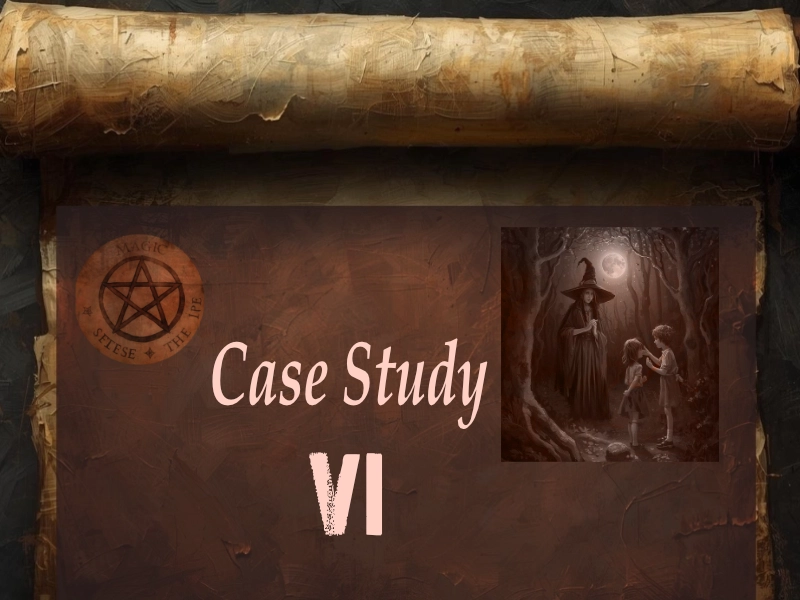
A young witch sought Hekate for power. Witnesses claimed three torches appeared in her hut. She gained immense magical ability, but her reflection ceased to follow her movements thereafter..

A wounded soldier on the brink of death claimed a three-faced figure offered him a choice: peace or return. He chose life. He survived—but spoke thereafter in riddles, as if seeing multiple futures at once.
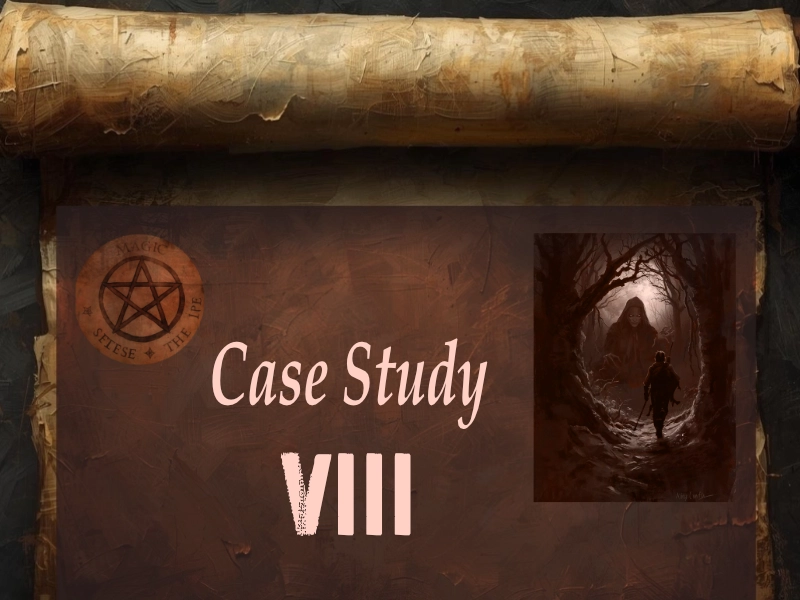
An entire village abandoned overnight after reports of howling hounds and torchlight at their central crossroad. No bodies were found. Only footprints leading in three directions—none returning.
Cultural Perception and Transformation
In certain traditions, she is revered as:
- Guardian of ancient wisdom
- Keeper of liminal knowledge
- Arbiter of worth
Across eras, Hekate has shifted from revered guardian to feared sorceress and back again. To some, she is a protector of the lost and a guide through darkness. To others, she is a dangerous force—an embodiment of the unknown that must not be invoked lightly. Modern interpretations increasingly view her as a symbol of transformation, autonomy, and the courage to face one’s own shadows.
Yet one truth remains constant across all tellings:
Where paths divide, where choices carry weight, and where the unseen presses close to the world of the living—
Filed under: Forest Entities, Liminal Beings, Trial Archetypes
Threat Classification: Variable — Context Dependent
Recommendation: Approach only with preparation, respect, and a willingness to be changed