HOME

Bazar

Bestiary

Gallery

about

Home/Archive by category „Witch“

Field Archive No. 17 — Sylvan Entities

Hekate

Sovereign of the Threshold

Threat Classification: Variable — Context Dependent
Recommendation: Approach only with preparation, respect, and a willingness to be changed


Appearance Manifestation

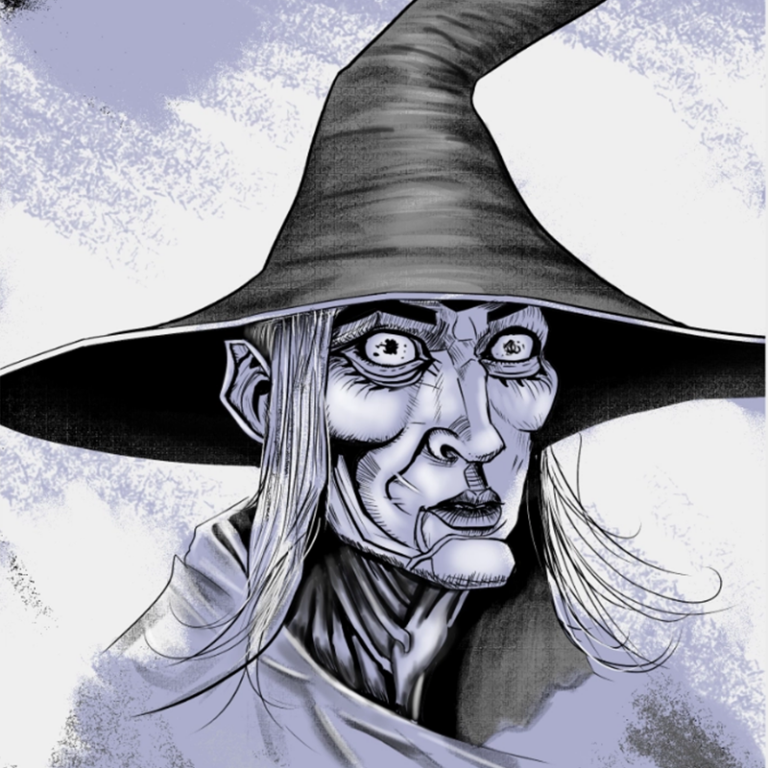
An ancient, shape-shifting forest crone bound to a living hut on chicken legs, Baba Yaga embodies the wild, liminal boundary between worlds, moving through the deep woods with elemental, nature-bound magic.

Character Personality

A morally ambiguous guardian of thresholds, she tests those who seek her out—rewarding the clever and respectful while punishing the foolish—acting as both devourer and initiator guided by ancient, non-human laws.

Cultural background

Hekate originates from ancient mythic traditions where she was revered as a liminal deity—guardian of thresholds, crossroads, and transitions. Unlike many gods bound to sky or earth, she exists between states: life and death, light and shadow, knowledge and oblivion. Over centuries, her worship evolved from honored protector to feared mistress of witchcraft and spirits. In hidden traditions, she remains a guide for seekers of arcane wisdom, invoked at boundaries both physical and metaphysical. Her symbols—keys, torches, and hounds—persist across cultures, marking her as a constant presence wherever paths converge and choices must be made..

Ježibaba in Czech regions
Baba Roga among South Slavs
Mat’ Lesa (Mother of the Wood) in Carpathian accounts

Neither Kind nor Cruel: The Law of Baba Yaga

They say that at the hour when night forgets itself—when even the moon hesitates behind a veil of drifting cloud—she walks.

Hekate does not arrive as other beings do. She is not summoned by sound alone, nor bound by circle or sigil. Instead, she seeps into existence where decisions hang unresolved—at the crossroads of the living world and the unseen. Travelers speak of a sudden stillness, of wind dying mid-breath, of shadows lengthening without cause. Then come the torches: pale flames blooming in the distance, moving though no hand seems to carry them.

And then she is there.

Three faces, or one shifting endlessly—none can agree. Some recall a young woman with knowing eyes; others, a crone whose gaze weighs heavier than stone. A few claim both are true at once. Her presence bends the world slightly out of alignment, as though reality itself acknowledges her authority and yields.

She does not ask questions. She already knows.

Those who meet her at the crossroads often stand at the brink of transformation—exile, ambition, despair, or revelation. To them, she offers neither salvation nor doom, but a choice sharpened to its purest edge. Her voice is soft, yet it carries through bone and memory alike, echoing with truths one cannot unknow.

The hounds come next. Silent at first, then circling. Their eyes gleam like distant stars, watching not the body, but the soul beneath it. They are her witnesses, her judges, and perhaps her companions in an eternity beyond mortal grasp.

Some kneel. Some run. Some attempt bargains.

Few leave unchanged.

For Hekate is not merely a keeper of doors—she is the understanding that every door leads somewhere irreversible. To stand before her is to confront the weight of one’s own path, stripped of illusion. And whether she grants passage or denies it, the result is always the same:

You will never again be who you were before you met her.

The House That Walks and Watches

Hekate is rarely alone, though her solitude feels absolute. Most commonly, she is accompanied by her hounds—creatures not entirely of flesh, nor fully of spirit. These beings shift between visibility and shadow, their forms flickering like dying embers. Legends claim they were once guardians of sacred thresholds, bound eternally to her service. Their howls are said to echo across dimensions, audible only to those standing at the brink of change or death.

Equally iconic are her keys. Forged of materials unknown—bone, star-metal, or crystallized shadow—they hang at her side or drift weightlessly around her form. Each key is believed to open something far greater than a door: sealed memories, forgotten realms, hidden truths, or even the boundaries between life and afterlife. No mortal has ever successfully taken one, though many have tried.

Her torches are perhaps her most paradoxical tools. Their flames illuminate what is hidden, yet often reveal truths too terrible or profound for the unprepared mind. They do not cast light in the conventional sense—instead, they expose essence. Under their glow, disguises fail, illusions unravel, and the soul stands bare.

As for her dwelling, no singular place can claim her. Hekate resides in thresholds themselves: crossroads, graveyards, abandoned doorways, and places where decisions linger unfinished. However, certain ancient sites—forgotten shrines, forest clearings, or ruined temples—are said to act as anchors for her presence. In these locations, offerings left at dusk sometimes vanish by dawn, replaced by subtle signs: a key-shaped mark in the dust, a lingering warmth, or the distant echo of unseen footsteps.

To encounter her domain is not to enter a place—but to step into a moment where the world holds its breath.

Though mobile, Baba Yaga appears intrinsically linked to her hut. Some accounts describe it as an extension of her will; others suggest it is a semi-autonomous entity.


Abilities and Limitation

Baba Yaga’s power is vast, but it is never careless. The forest itself listens to her. Animals move at her command—wolves, birds, and unseen creatures carrying out her will as naturally as breathing. Storms gather or break apart when she travels, winds bending to her path as her mortar cuts through the sky. Distance means little to her; she can cross immense stretches of land in moments, appearing where she is needed—or feared—without warning. More dangerous still is what she knows. Baba Yaga is said to guard ancient knowledge of life and death, of endings and beginnings, of how one thing becomes another. These secrets are not taught freely. They are earned.

Yet for all her strength, Baba Yaga is bound by old laws she did not create and cannot break. If a guest approaches her properly—invoking the rites of hospitality, offering respect and sustenance—she must honor that bond, no matter her hunger. When she sets a task or poses a riddle, she is bound to see it through. The trial must be completed. The judgment must be delivered. She cannot simply abandon the process once it has begun.

This is the paradox at the heart of Baba Yaga. She is nearly unstoppable, yet never unbound. Her magic is immense, but it moves within strict, ancient rules. In this balance lies her true nature: not chaos, but order of a harsher kind—one that does not bend to desire, only to law.

Capabilities

Constraints

These rules form the paradox of her existence: her greatest power is matched by her greatest limitation.

Encounters and Recorded Testimonies

Those who survive an encounter with Baba Yaga tell similar stories, no matter where the tale is found. It usually begins with desperation. A child is cast out, an exile wanders too far, or a traveler loses the path and steps into the deep forest where the rules of the human world no longer apply. Somewhere beyond fear, the petitioner reaches her domain and makes a request—often for fire, food, protection, or knowledge. Baba Yaga listens, but she never answers directly. Instead, she sets tasks that appear impossible: sorting the unsortable, cleaning what cannot be cleaned, completing work meant to break the spirit. These trials are never about strength. They are traps for arrogance. Survival depends on cleverness, patience, humility, and sometimes help from unexpected allies—animals, enchanted objects, or quiet acts of kindness repaid. Those who boast, complain, or demand are destroyed without ceremony. Those who observe, listen, and adapt may be allowed to leave, changed but alive. In these testimonies, Baba Yaga does not chase or deceive. She waits. The choice to enter her world is always the final test—and once made, there is no turning back.

Encounters follow a consistent narrative structure:

  1. A desperate petitioner (often a child or exile) enters her domain
  2. A request for aid is made
  3. The subject is given impossible tasks
  4. Outcome hinges on cunning, humility, or external aid


Signs of Presence

Signs of Presence

Human Interaction and Bargain

Human Interaction and Bargainu00

Case Study V

Case Study VI

Case Study VII

Case Study VIII


Cultural Perception and Transformation

In certain traditions, she is revered as:

  • Guardian of ancient wisdom
  • Keeper of liminal knowledge
  • Arbiter of worth

Across eras, Hekate has shifted from revered guardian to feared sorceress and back again. To some, she is a protector of the lost and a guide through darkness. To others, she is a dangerous force—an embodiment of the unknown that must not be invoked lightly. Modern interpretations increasingly view her as a symbol of transformation, autonomy, and the courage to face one’s own shadows.

Yet one truth remains constant across all tellings:

Where paths divide, where choices carry weight, and where the unseen presses close to the world of the living—


Filed under: Forest Entities, Liminal Beings, Trial Archetypes
Threat Classification: Variable — Context Dependent
Recommendation: Approach only with preparation, respect, and a willingness to be changed

Home/Archive by category „Witch“

Field Archive No. 17 — Sylvan Entities

BABA YAGA

Matrona Sylvarum, The Crone of the Living Forest

Threat Classification: Variable — Context Dependent
Recommendation: Approach only with preparation, respect, and a willingness to be changed


Appearance & Manifestation

An ancient, shape-shifting forest crone bound to a living hut on chicken legs, Baba Yaga embodies the wild, liminal boundary between worlds, moving through the deep woods with elemental, nature-bound magic.

Character & Personality:

A morally ambiguous guardian of thresholds, she tests those who seek her out—rewarding the clever and respectful while punishing the foolish—acting as both devourer and initiator guided by ancient, non-human laws.

Cultural background

Her name is hard to pin down to a single meaning. Baba is an old word for an elderly woman—a grandmother, a crone, an ancestor. Yaga is darker. It speaks of fear, pain, and anger. Put together, the name carries a contradiction. Baba Yaga is both the one who gives life and the one who takes it away. She can be a protector—or a disaster.

Across the Slavic world, people knew her by many names. In Czech lands, she was called Ježibaba. Among the South Slavs, she became Baba Roga. In the Carpathian mountains, some whispered of Mat’ Lesa, the Mother of the Wood. The names changed, but the presence stayed the same.

Her home was always the forest—not just any forest, but the deep, old woods stretching from the lands of Rus’ toward the Ural Mountains. These were places where paths vanished and rules no longer applied. Some believe Baba Yaga is older than history itself, born from ancient beliefs that existed before churches, before kingdoms, before written words.

She appears in written records as early as the Middle Ages, but her stories are far older. Long before they were written down, people told them by firelight. Some say her roots reach back to a time when humans lived at the mercy of the forest—when its spirits were not symbols or stories, but forces that decided who lived and who did not.

Ježibaba in Czech regions
Baba Roga among South Slavs
Mat’ Lesa (Mother of the Wood) in Carpathian accounts

Neither Kind nor Cruel: The Law of Baba Yaga

Baba Yaga does not belong to good or evil in any clean way. In the stories, she shifts constantly—hostile in one moment, helpful in the next, and sometimes utterly indifferent to human suffering. A traveler may come to her starving and frightened and be eaten without mercy, while another, arriving under nearly the same circumstances, is fed, tested, and sent away wiser than before. This contradiction is not a flaw in the tales. It is the point.

Many scholars believe Baba Yaga is not driven by cruelty, but by trial. Hunger is often named as her motive, and sometimes it is very real—she is said to consume flesh and bone without shame. But just as often, that hunger is symbolic. She feeds on fear, on failure, on those who arrive unprepared for the forest and its laws. She does not hunt. She waits.

When humans come before her, Baba Yaga becomes an examiner. She sets tasks that seem pointless or impossible: sorting grain from ash, cleaning her house, tending fires that must not die. These trials are never about strength. They are about patience, respect, and attention. Those who complain, rush, or assume entitlement are destroyed. Those who listen, endure, and show humility may survive—and even be rewarded.

If she helps, it is rarely out of kindness. She helps because something must continue. A journey must be completed. A balance must be restored. In this way, Baba Yaga acts less like a villain and more like a force of nature—harsh, ancient, and unmoved by excuses.

She does not simply consume- she tests and only then decides what remains.

The House That Walks and Watches

Baba Yaga’s home is as feared as its mistress. Deep in the forest, where paths fade and trees grow close together, stands her hut—the izba na kur’ikh nozhkakh. It does not rest on the ground like a proper house. Instead, it balances on enormous chicken legs, creaking and shifting as if alive. At times it turns its back on visitors, refusing entry. At others, it slowly rotates, as though deciding whether the one who approaches is worth noticing at all.

The forest around the hut is thick and trackless, a place where direction is easily lost and sound carries strangely. Encircling the dwelling is a fence made not of wood, but of human bones. Skulls crown the posts, their hollow eyes glowing with an unnatural light that flickers even when no fire burns. These lights do not guide travelers to safety. They warn.

Baba Yaga does not appear without cause. Most who encounter her do so after a mistake—wandering too far from known roads, breaking an unspoken rule of the woods, or crossing into places meant to remain untouched. Others seek her out deliberately, performing old rituals, leaving offerings, and calling her name with care and fear. Even then, there is no guarantee she will answer.

Though mobile, Baba Yaga appears intrinsically linked to her hut. Some accounts describe it as an extension of her will; others suggest it is a semi-autonomous entity.


Abilities and Limitations

Baba Yaga’s power is vast, but it is never careless. The forest itself listens to her. Animals move at her command—wolves, birds, and unseen creatures carrying out her will as naturally as breathing. Storms gather or break apart when she travels, winds bending to her path as her mortar cuts through the sky. Distance means little to her; she can cross immense stretches of land in moments, appearing where she is needed—or feared—without warning. More dangerous still is what she knows. Baba Yaga is said to guard ancient knowledge of life and death, of endings and beginnings, of how one thing becomes another. These secrets are not taught freely. They are earned.

Yet for all her strength, Baba Yaga is bound by old laws she did not create and cannot break. If a guest approaches her properly—invoking the rites of hospitality, offering respect and sustenance—she must honor that bond, no matter her hunger. When she sets a task or poses a riddle, she is bound to see it through. The trial must be completed. The judgment must be delivered. She cannot simply abandon the process once it has begun.

This is the paradox at the heart of Baba Yaga. She is nearly unstoppable, yet never unbound. Her magic is immense, but it moves within strict, ancient rules. In this balance lies her true nature: not chaos, but order of a harsher kind—one that does not bend to desire, only to law.

Capabilities:

Constraints:

These rules form the paradox of her existence: her greatest power is matched by her greatest limitation.

Encounters and Recorded Testimonies

Those who survive an encounter with Baba Yaga tell similar stories, no matter where the tale is found. It usually begins with desperation. A child is cast out, an exile wanders too far, or a traveler loses the path and steps into the deep forest where the rules of the human world no longer apply. Somewhere beyond fear, the petitioner reaches her domain and makes a request—often for fire, food, protection, or knowledge. Baba Yaga listens, but she never answers directly. Instead, she sets tasks that appear impossible: sorting the unsortable, cleaning what cannot be cleaned, completing work meant to break the spirit. These trials are never about strength. They are traps for arrogance. Survival depends on cleverness, patience, humility, and sometimes help from unexpected allies—animals, enchanted objects, or quiet acts of kindness repaid. Those who boast, complain, or demand are destroyed without ceremony. Those who observe, listen, and adapt may be allowed to leave, changed but alive. In these testimonies, Baba Yaga does not chase or deceive. She waits. The choice to enter her world is always the final test—and once made, there is no turning back.

Encounters follow a consistent narrative structure:

  1. A desperate petitioner (often a child or exile) enters her domain
  2. A request for aid is made
  3. The subject is given impossible tasks
  4. Outcome hinges on cunning, humility, or external aid


Signs of Presence

Signs of Presence

Human Interaction and Bargain

Human Interaction and Bargain

Case Study V

Case Study VI

Case Study VII

Case Study VIII


Cultural Perception and Transformation

In certain traditions, she is revered as:

  • Guardian of ancient wisdom
  • Keeper of liminal knowledge
  • Arbiter of worth

Baba Yaga lingers at the threshold of fear and reverence, a figure neither wholly condemned nor comfortably embraced. In the shifting shadows of Slavic folklore, she is more than a crone of the woods—she is a living paradox, a guardian of ancient wisdom whispered through roots and bones, a keeper of liminal knowledge that exists between worlds, and an arbiter of worth who tests those daring enough to seek her out. Those who approach her with arrogance find only ruin, yet the humble and perceptive may leave transformed, carrying fragments of truths too wild to be spoken aloud. In this way, Baba Yaga resists simple judgment; she is not evil, but elemental—an embodiment of the harsh, necessary forces that shape those who wander too close to the edges of understanding.


Filed under: Forest Entities, Liminal Beings, Trial Archetypes
Threat Classification: Variable — Context Dependent
Recommendation: Approach only with preparation, respect, and a willingness to be changed

Ursprung, Mythologie & Wesen der Göttin Hekate
Die Göttin Hekate gehört zu den ältesten und zugleich geheimnisvollsten Gestalten der antiken Mythologie. Ihre Herkunft reicht tiefer als die klassische griechische Götterwelt und verweist auf uralte Vorstellungen von Magie, Schwellen und Transformation. Wer sich mit der Frage beschäftigt „Wer ist Hekate?“, stößt unweigerlich auf eine Göttin, die sich einfachen Kategorien entzieht.
In der griechischen Mythologie erscheint Hekate bereits bei Hesiod als mächtige Gottheit mit einer außergewöhnlichen Stellung. Anders als viele Titanen verlor sie ihre Macht nach dem Aufstieg der olympischen Götter nicht. Im Gegenteil: Zeus selbst bestätigte ihr ihre Autorität. Hekate wurde die Herrschaft über Himmel, Erde und Unterwelt zugesprochen – ein Alleinstellungsmerkmal, das ihre Rolle als Grenz- und Übergangsgöttin unterstreicht. Sie wirkt dort, wo Welten sich berühren und Gewissheiten enden.
Viele Forschende gehen davon aus, dass Hekate vorgriechische oder anatolische Wurzeln besitzt. Hinweise darauf finden sich in ihrem Namen, ihrer Funktion und ihrer engen Verbindung zu Naturkräften, Nacht und Unterwelt. In diesen frühen Kulturen war sie vermutlich eine eigenständige Große Göttin, die später in das griechische Pantheon integriert wurde. Diese archaische Herkunft erklärt, warum Hekate weniger „olympisch“ und stärker erdverbunden, chthonisch und magisch erscheint als viele andere Göttinnen.
Zentral für das Wesen der Hekate ist ihre Verbindung zu Übergängen und Schwellenräumen. Sie gilt als Hüterin von Kreuzungen, Toren, Grenzen zwischen Leben und Tod, Licht und Dunkelheit, Bewusstsein und Unbewusstem. Dort, wo Menschen Entscheidungen treffen oder alte Wege verlassen, wird Hekate angerufen. Sie führt nicht, indem sie schützt oder tröstet, sondern indem sie Klarheit erzwingt. Ihr Wirken ist transformierend – manchmal fordernd, aber stets wahrhaftig.
Aus genau diesem Grund entwickelte sich Hekate zur Schutzgöttin der Hexen. In der Antike wie in der modernen Hexenkunst steht sie für geheimes Wissen, magische Praxis und die Fähigkeit, zwischen den Welten zu wandeln. Hexen sehen in ihr eine Mentorin für Schattenarbeit, Initiation und Selbstermächtigung. Hekate bewacht das verborgene Wissen, öffnet Tore für jene, die bereit sind, Verantwortung für ihren eigenen Weg zu übernehmen, und schützt jene, die sich bewusst an die Schwelle wagen.
Die Göttin Hekate ist damit keine sanfte Lichtgestalt, sondern eine machtvolle Begleiterin in Zeiten des Wandels. Ihre Mythologie erzählt von Transformation, Grenzüberschreitung und innerer Reifung – Themen, die bis heute nichts von ihrer Bedeutung verloren haben.
Symbole der Göttin Hekate – Bedeutung, Magie und visuelle Kraft
Die Symbolik der Göttin Hekate ist vielschichtig, archaisch und zutiefst magisch. Ihre Zeichen sind keine bloßen dekorativen Elemente, sondern Träger von Bedeutung, Schutz und Transformation. In der Hexenkunst – ebenso wie in der bildlichen Darstellung – dienen diese Symbole als Verbindung zwischen der sichtbaren und der unsichtbaren Welt.
Gerade deshalb eignen sich Hekate-Symbole besonders für Siegel, Illustrationen und rituelle Gegenstände: Sie bündeln Energie, erzählen Geschichten und wirken über das Bild hinaus.
Der Schlüssel – Wissen, Schwellen und Initiation
Der Schlüssel ist eines der bekanntesten Symbole der Hekate. Er steht für den Zugang zu verborgenem Wissen, zu inneren Räumen und zu Übergängen, die nicht allen offenstehen. Hekate hält den Schlüssel zu den Toren zwischen den Welten – und entscheidet, wer hindurchtreten darf.
In der Symbolarbeit repräsentiert der Schlüssel:
Initiation und persönliche Entwicklung
geheimes Wissen und magische Praxis
bewusste Entscheidungen an Wendepunkten
Als grafisches Element eignet sich der Schlüssel besonders für Siegel, Tarot-artige Motive oder rituelle Illustrationen, da er sofort eine Schwellenfunktion kommuniziert.

Die Fackel – Licht im Dunkeln
Hekate wird häufig mit einer oder zwei Fackeln dargestellt. Sie beleuchtet nicht den sicheren Weg, sondern den nächsten Schritt im Dunkeln. Die Fackel steht für Erkenntnis, die nicht blendet, sondern führt.
Symbolisch bedeutet die Fackel:
Orientierung in unsicheren Phasen
Erkenntnis durch Erfahrung
Licht ohne Verdrängung der Dunkelheit
In Illustrationen wirkt die Fackel besonders stark als Lichtquelle, die Kontraste erzeugt – ein zentrales Motiv für Poster, Charakterdesigns und ikonische Darstellungen der Göttin.

Die Kreuzung – Entscheidung und Transformation
Kreuzungen, insbesondere Dreiwegekreuzungen, gelten seit der Antike als Orte Hekates. Sie symbolisieren Entscheidungen, Übergänge und den Moment zwischen „noch nicht“ und „nicht mehr“.
Die Kreuzung steht für:
Wahlmöglichkeiten und Verantwortung
Übergänge zwischen Lebensphasen
magische Zwischenräume
Visuell lassen sich Kreuzungen hervorragend abstrahieren – etwa in kreisförmigen Siegeln, geometrischen Mustern oder symbolischen Hintergründen, die für Flaggen oder großformatige Prints besonders geeignet sind.

Tiere der Hekate – Wächter zwischen den Welten
Besonders der Hund ist eng mit Hekate verbunden. Er gilt als Wächter, Begleiter und Warner. Hunde nehmen wahr, was Menschen verborgen bleibt – eine Fähigkeit, die Hekates Rolle als Grenzgöttin widerspiegelt. Auch Schlangen erscheinen als ihre Begleiterinnen und stehen für Erneuerung und Unterwelt.
Tier-Symbolik bei Hekate bedeutet:
Schutz an Schwellen
Instinkt und Wahrnehmung
Transformation und zyklisches Werden
Diese Motive eignen sich besonders für Charakterportraits, ikonische Tierdarstellungen oder tarotartige Bildkompositionen, in denen Tier und Göttin miteinander verschmelzen.

Das Siegel – Ordnung im Chaos
Das runde Siegel ist keine antike Konstante, aber eine zeitgemäße Form, um Hekates Prinzipien visuell zu bündeln. Kreise stehen für Ganzheit, Schutz und Wiederkehr. In Verbindung mit Hekate-Symbolen entsteht ein starkes Zeichen, das sowohl rituell als auch ästhetisch wirkt.
Ein Hekate-Siegel kann:
Schutz und Abgrenzung symbolisieren
Fokus und Intention bündeln
als visuelles Statement dienen
Deshalb finden sich solche Siegel besonders häufig auf Textilien, Sketchbooks oder Flaggen – Gegenständen also, die entweder im Alltag getragen oder bewusst im kreativen bzw. spirituellen Kontext genutzt werden.

Symbolik als gelebte Praxis
Für moderne Hexen ist Symbolik kein Selbstzweck. Symbole werden gezeichnet, getragen, betrachtet oder im Alltag integriert, um eine kontinuierliche Verbindung zur eigenen Praxis herzustellen. Ob in einem Sketchbook, als Illustration an der Wand oder als Zeichen auf Kleidung – Hekate-Symbole wirken durch Wiederholung, Aufmerksamkeit und Intention.
Die Symbolwelt der Göttin Hekate lädt dazu ein, nicht nur zu betrachten, sondern in Beziehung zu treten. Jedes Symbol ist eine Einladung, sich der eigenen Schwelle bewusst zu werden.
Moderne Bedeutung, Missverständnisse & Fazit: Die Göttin Hekate heute
In der modernen Spiritualität und Hexenkunst erlebt die Göttin Hekate eine bemerkenswerte Wiederentdeckung. Sie steht heute weniger für ferne Mythologie als vielmehr für einen lebendigen archetypischen Zugang zu Themen wie Wandel, Selbstermächtigung und bewusster Grenzüberschreitung. Viele Hexen und spirituell Praktizierende wenden sich Hekate in Phasen des Umbruchs zu – dann, wenn alte Strukturen nicht mehr tragen und neue Wege noch nicht sichtbar sind.
Ein zentrales Missverständnis rund um Hekate besteht in der Gleichsetzung von Dunkelheit mit Bösartigkeit. In der modernen Popkultur wird sie häufig als finstere, bedrohliche Figur dargestellt. Diese Sichtweise greift jedoch zu kurz. Die Dunkelheit, für die Hekate steht, ist keine destruktive Kraft, sondern ein Raum der Erkenntnis. Sie symbolisiert das Unbekannte, das Unbewusste und jene inneren Prozesse, die jenseits von Oberflächlichkeit stattfinden. In diesem Sinne ist Hekate keine „dunkle Göttin“, sondern eine Göttin der Tiefe.
Gerade in einer Zeit, die von Beschleunigung, Unsicherheit und Identitätsfragen geprägt ist, gewinnt Hekates Symbolik neue Relevanz. Sie verkörpert Transformation nicht als sanften Übergang, sondern als bewussten Akt. Wer sich Hekate zuwendet, sucht keine Abkürzungen, sondern Klarheit. Ihre Präsenz fordert dazu auf, Verantwortung für den eigenen Weg zu übernehmen, Entscheidungen nicht aus Angst zu vermeiden und Grenzen bewusst zu überschreiten – innerlich wie äußerlich.
In der modernen Hexenkunst steht Hekate daher für Selbstermächtigung. Sie begleitet Prozesse der Schattenarbeit, der persönlichen Initiation und der Rückverbindung mit der eigenen Intuition. Ihre Rolle ist nicht die einer tröstenden Mutterfigur, sondern die einer Mentorin, die Wachstum durch Erkenntnis ermöglicht. Hekate öffnet Türen – hindurchgehen muss jede:r selbst.
Als Fazit lässt sich sagen: Die Göttin Hekate ist heute aktueller denn je. Sie spricht Menschen an, die sich nicht mit einfachen Antworten zufriedengeben, sondern bereit sind, sich mit Übergängen, Brüchen und innerer Wandlung auseinanderzusetzen. Ihre Symbolik, ihre Mythen und ihre Präsenz laden dazu ein, das eigene Leben als bewussten Weg zwischen den Welten zu begreifen.
Dieser Artikel versteht sich daher nicht als abschließende Erklärung, sondern als Einladung zur bewussten Auseinandersetzung. Hekate lässt sich nicht vollständig erklären – sie lässt sich nur erfahren.