
ORDERED BY STAGE, NOT BY PIECE
The Workbench
STATION I OF V · GESTURE
Gesture
Gesture is the first breath of a drawing, capturing movement, weight, and intention before detail takes shape. It connects the figure through flowing rhythms, giving even a quiet pose a sense of life. These early lines carry the energy that guides the finished artwork.

The bowed head and folded limbs draw the movement inward. Sweeping lines connect the pose, exploring how weight settles into a compact silhouette.

Raised arms stretch the torso into an upward rhythm. The opposing angles of shoulders and hips give the pose its tension and balance.
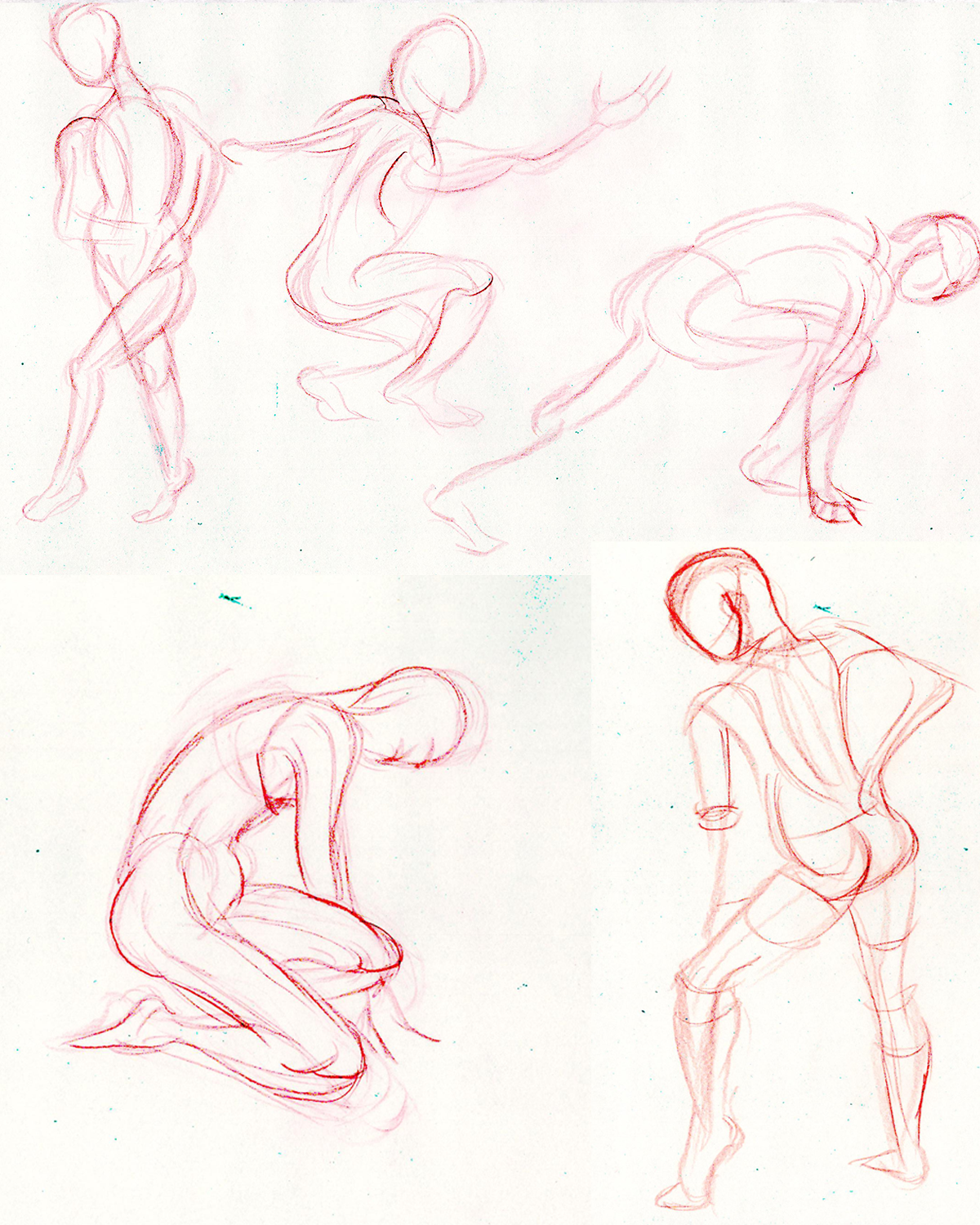
Red colored pencil traces the flow of each pose, from a quiet shift of weight to a sudden reach or crouch. These quick studies capture movement before anatomy and detail take shape.
STATION II OF V · GESTURE
Ideation
Ideation is where a passing gesture begins to suggest a character, a story, or an entire scene. Working quickly in graphite or charcoal allows me to explore movement and turn the first spark of an idea into a readable composition.
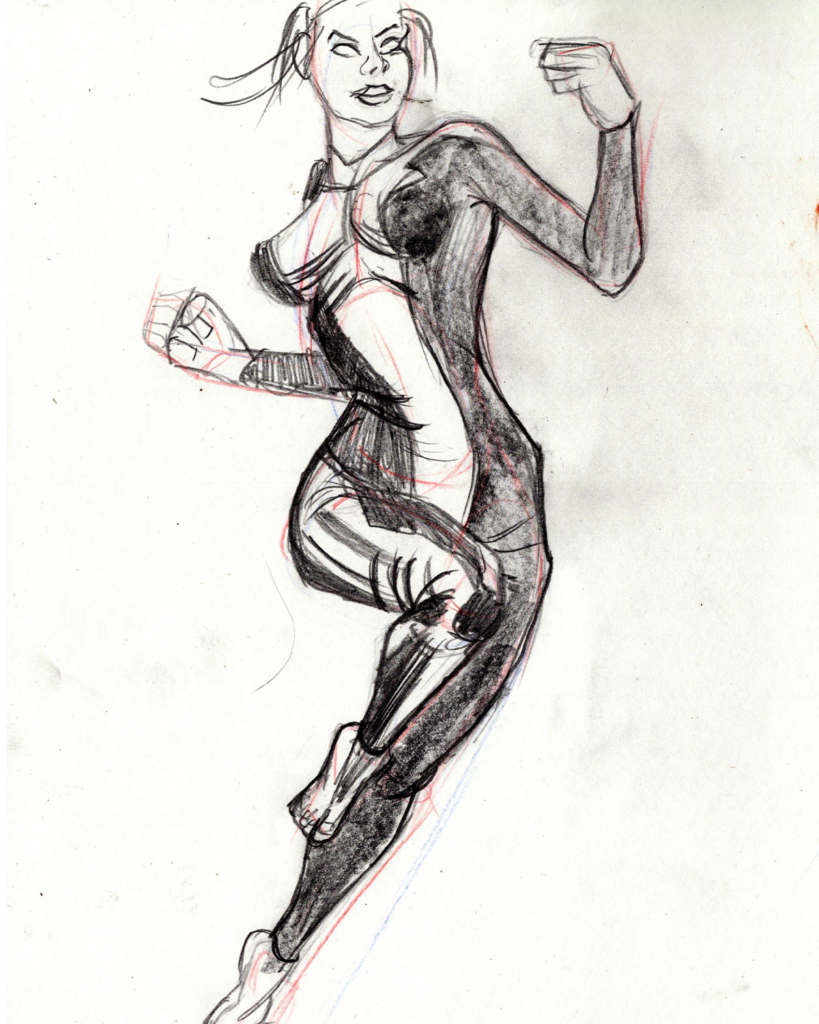
A dynamic gesture becomes the foundation for pose, costume, and attitude. Loose construction lines preserve the energy of the first idea.
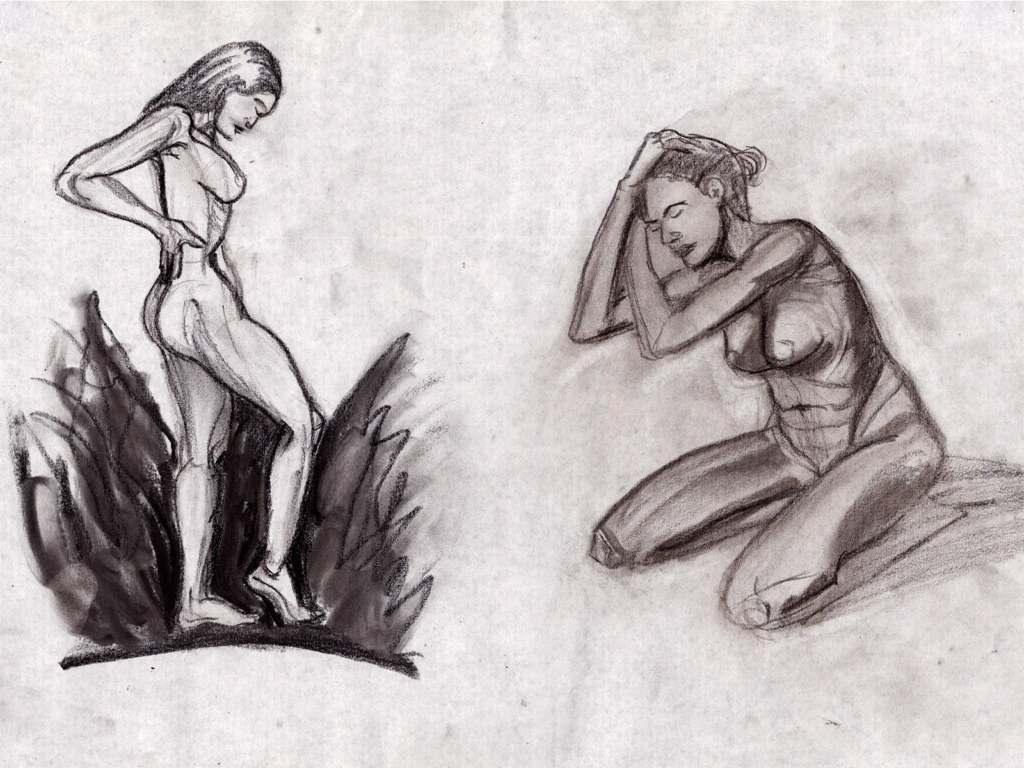
Small studies allow different poses and emotions to be tested without committing to a finished design. Each variation searches for the clearest expression of the idea.
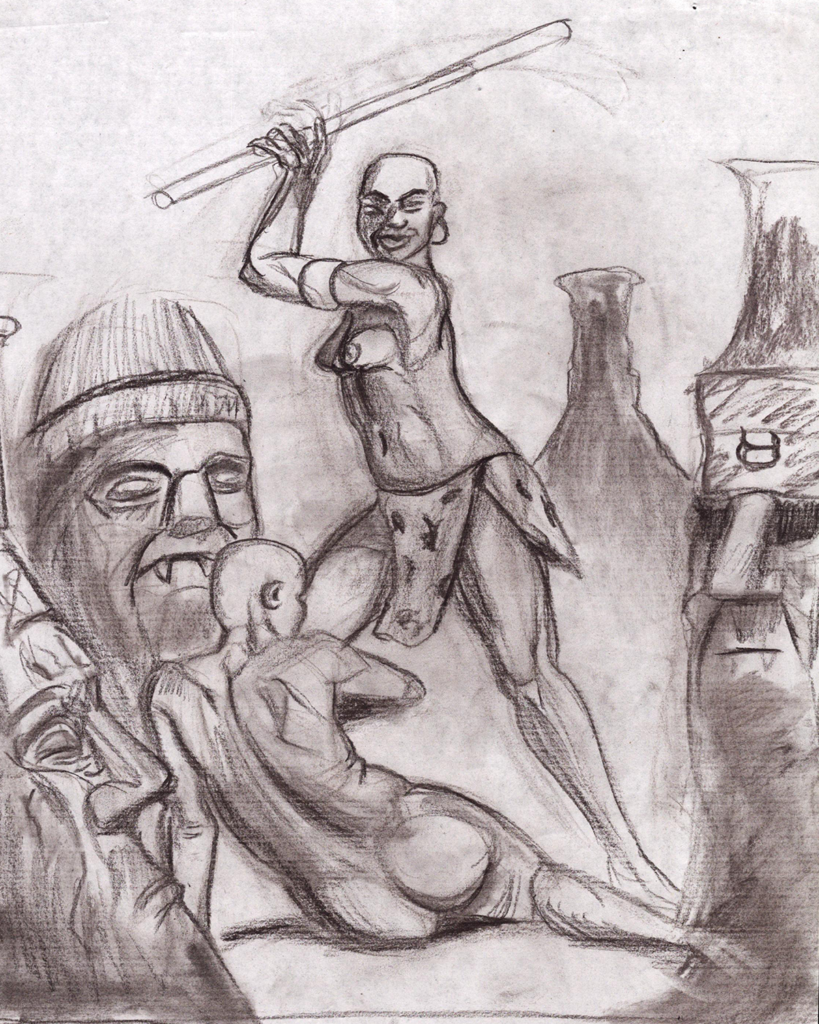
Separate gestures begin to interact as figures, shapes, and surroundings are arranged into a composition. At this stage, the first suggestion of a story emerges.
STATION III OF V · Portrait
Portraits in traditional media
Portraiture is the study of both structure and character. Working in ink, charcoal, and gouache, I explore how the anatomy of the skull shapes every plane, shadow, and expression of the human face.
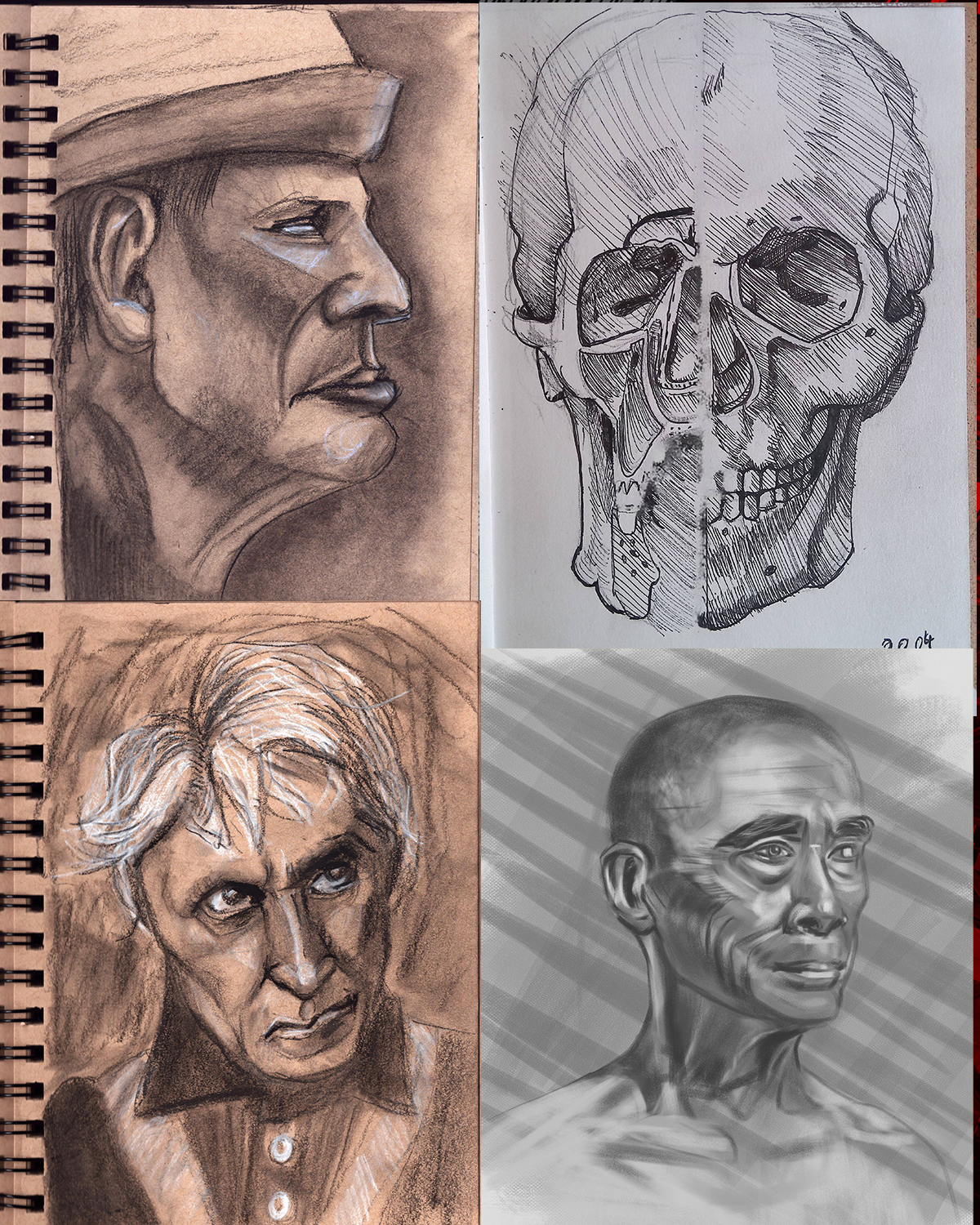
Studies of the skull and head reveal the structure beneath individual features. Understanding this anatomy creates the foundation for convincing portraits and expressive characters.
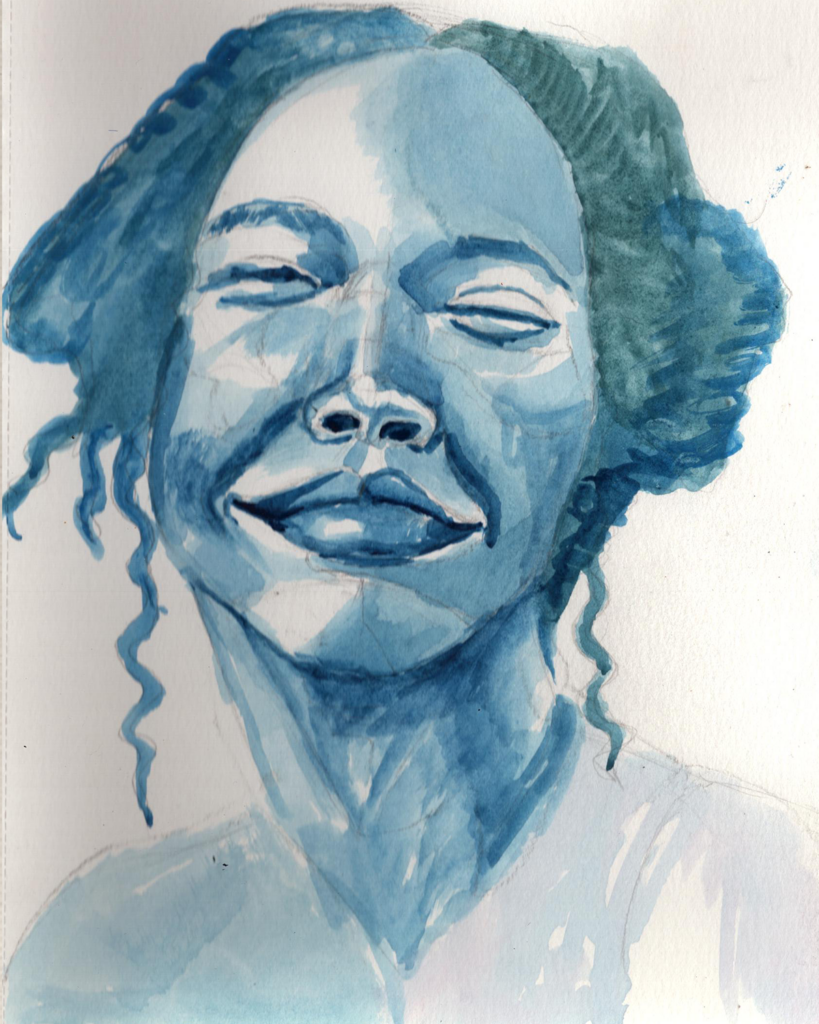
Broad shapes of cool gouache describe the planes of the face, while restrained details preserve the quiet expression of the sitter.
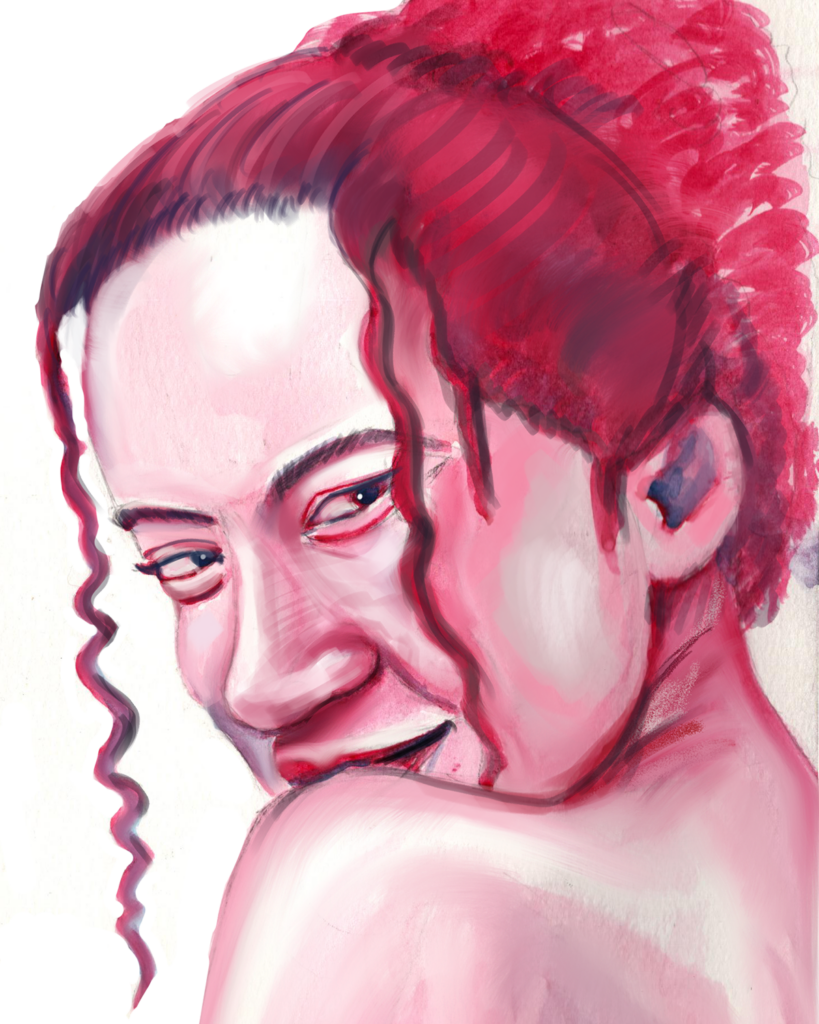
Vivid reds and flowing brushstrokes transform an anatomical study into a portrait charged with warmth, personality, and presence.
STATION Iv OF V · Stylization
Digital Portraits
Digital portraiture allows anatomy to be reshaped through bold lines, simplified forms, and dramatic contrasts. Inspired by classic comics and horror cinema, I use stylization to heighten character, mood, and visual storytelling.
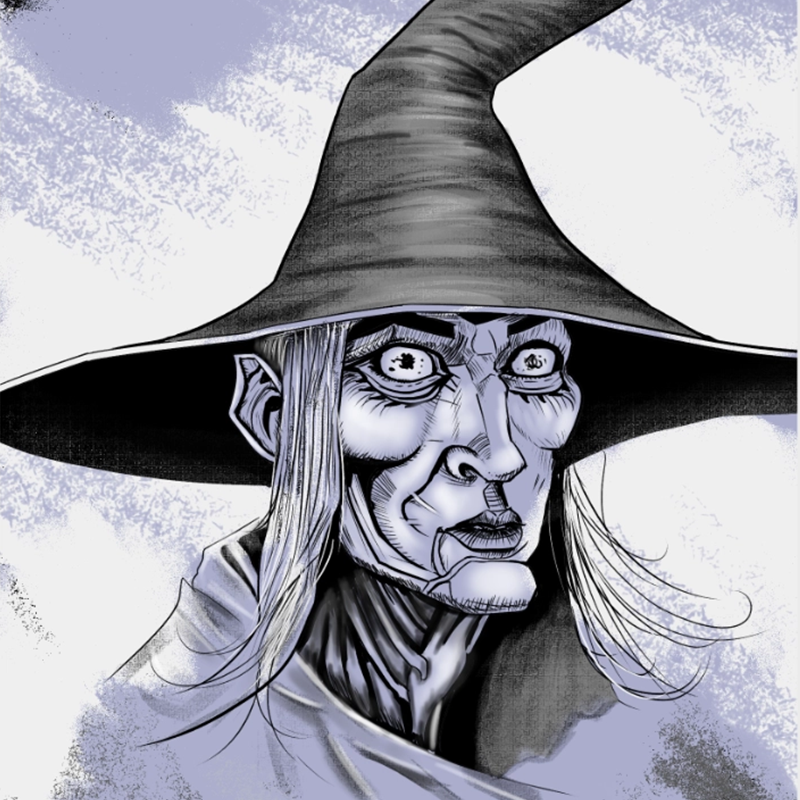
Sharp features, deep shadows, and restless linework transform the portrait into a figure of dark folklore. Exaggeration gives the character her unsettling presence.
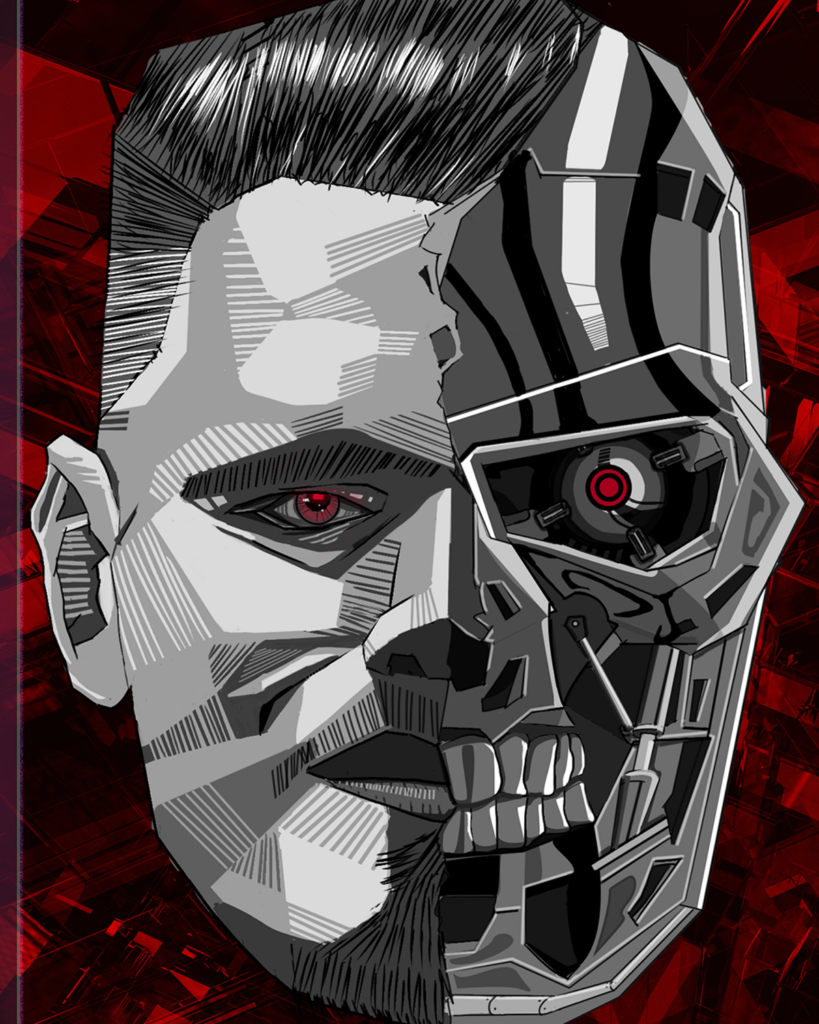
The divided face contrasts human identity with mechanical precision. Angular shapes and a restrained black, grey, and red palette create a cold dystopian tension.
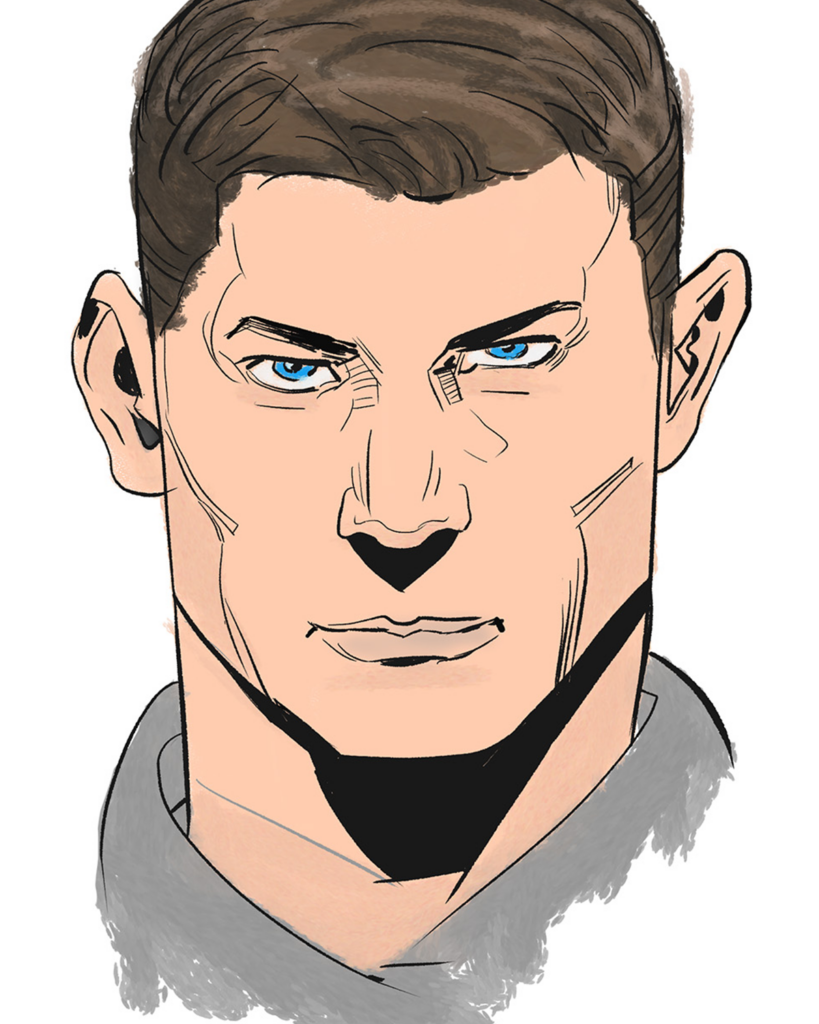
Clean contours and simplified planes recall the direct visual language of classic comic art. The focused gaze gives the character strength, confidence, and resolve.
STATION V OF V · Digital Artworks
Characters in Context
A character begins to tell a story when placed within a world. Environment, light, and atmosphere create context—suggesting where the character has come from, what is happening now, and what may follow.
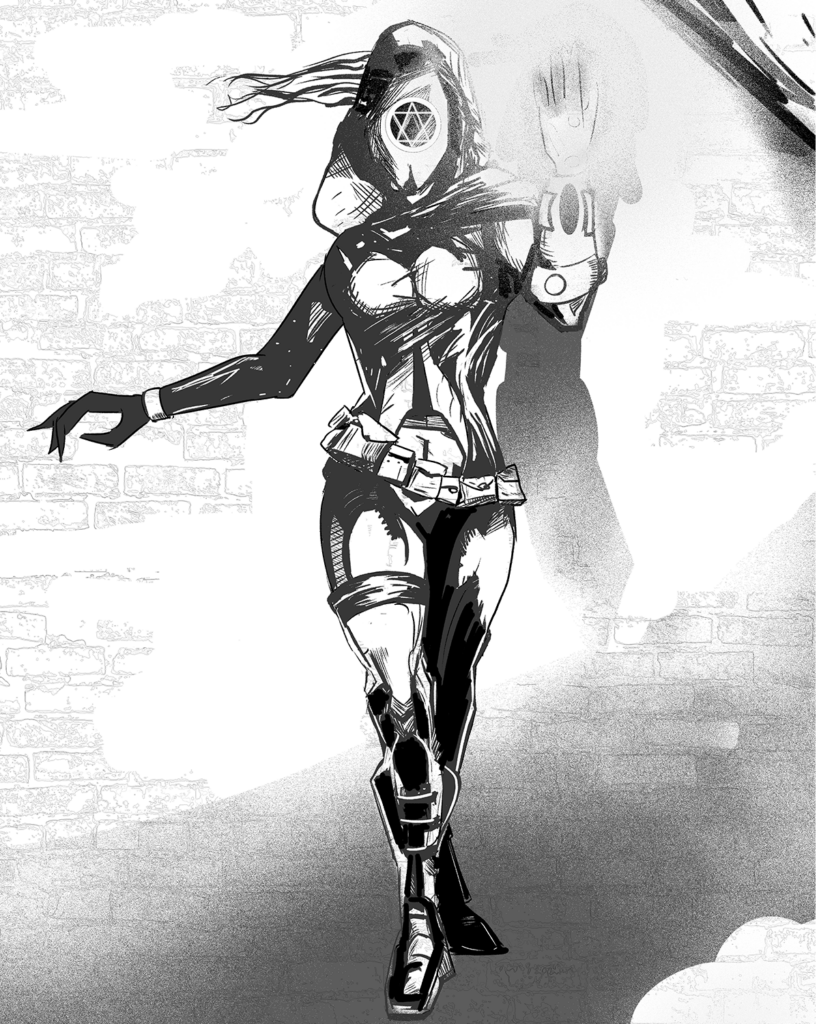
A solitary figure emerges from the pale urban haze. Her guarded pose and obscured face suggest danger, secrecy, and a mission not yet revealed.

A glowing orb illuminates the figure and turns a quiet portrait into a mysterious encounter. Light becomes both the focal point and the beginning of the story.
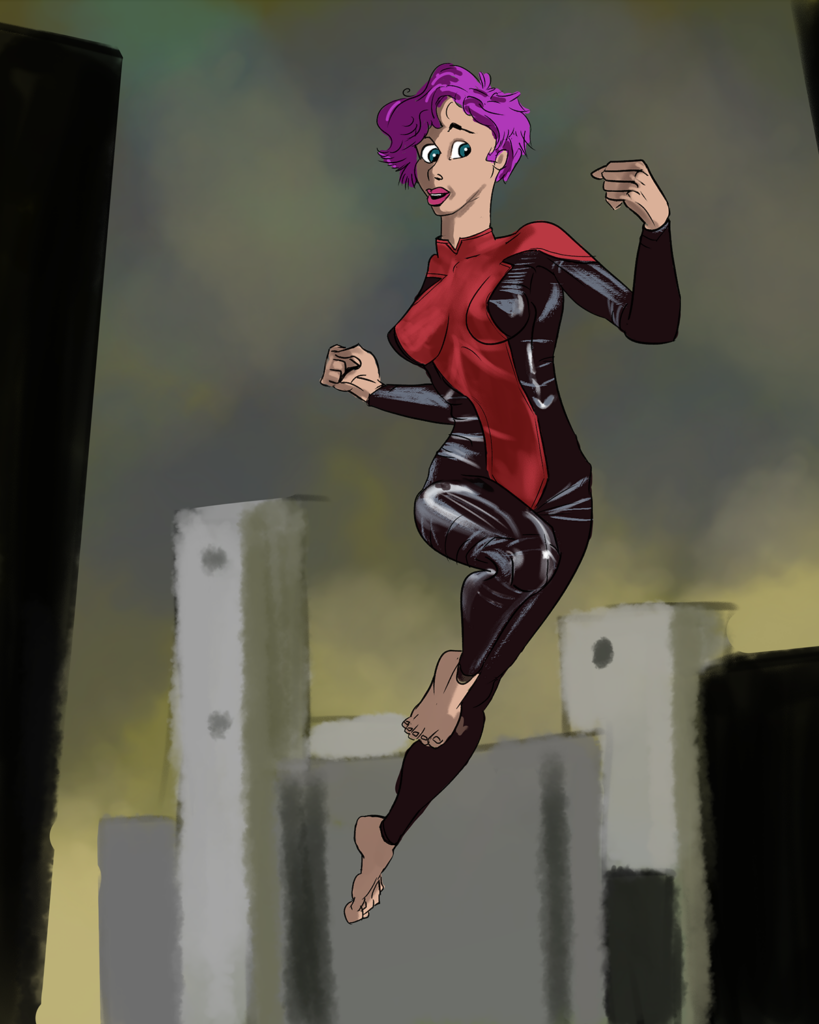
Caught between rooftops, the character becomes part of a larger world in motion. The skyline establishes scale, while the airborne pose creates urgency and adventure.