The Schmied von Kochel is a forge‑born giant of memory—a blacksmith turned myth, who rose from fire and blood to give dignity to defeat and iron to remembrance. In the deep cultural memory of Bavaria, there stands a figure shaped not by certainty, but by fire, loss, and defiance.
He is known as the Schmied von Kochel—the Blacksmith of Kochel—a giant of a man said to have risen from forge and battlefield alike, carrying iron where others carried prayers. Whether he ever truly lived matters less than why he was remembered.
The Schmied is not a fairy tale spirit, nor a saint. He is something heavier:
a hero‑myth forged from trauma, created to give shape and dignity to defeat
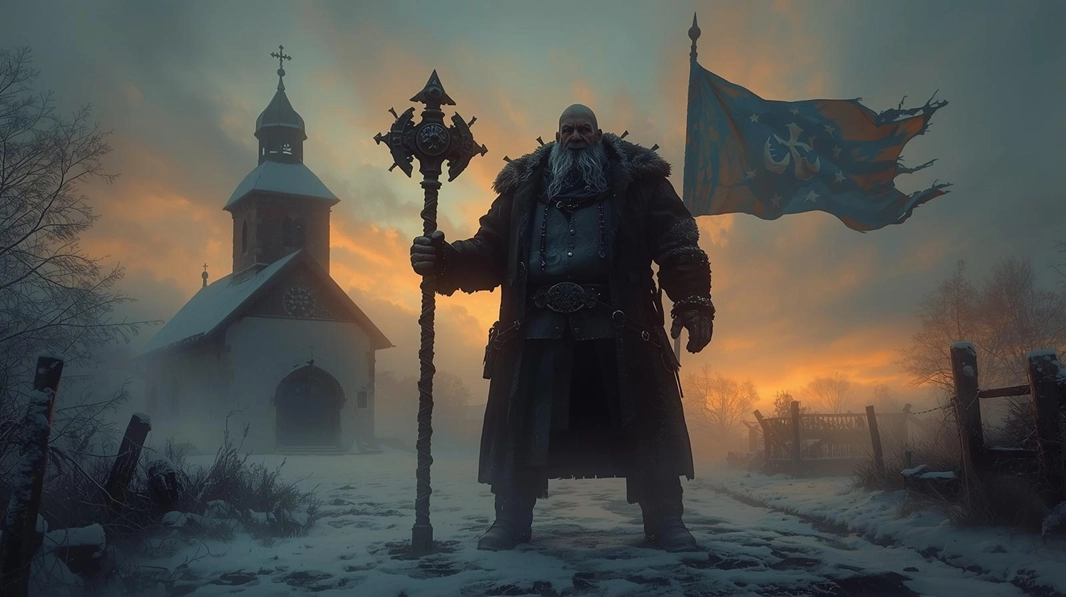
The Core Legend: The Blacksmith Who Would Not Fall
- Fought in the Turkish wars 1700
- Allegedly smashed open the gates of Belgrade using a metal bar
- Bavarian hardened warrior and craftsman
- leading figure in the Bavarian peasant uprising of 1705
- Carried a massive, nail‑studded club said to weigh (over 50 kg)
According to Upper Bavarian legend, the Schmied von Kochel was a blacksmith of immense physical power, often given the name Balthasar, described as almost giant‑like in stature and strength. Folk tradition casts him first as a soldier in the Great Turkish War of the late 17th century, where he allegedly fought against the Ottomans and earned a fearsome reputation.
One of the most persistent motifs tells that he smashed open the gates of Belgrade using nothing but an iron bar—an image that firmly anchors him in the mythic realm of superhuman strength rather than verifiable military history. After the wars, the legend says, he returned to Bavaria not merely as a veteran, but as something harder: a man reforged by violence, discipline, and iron. [de.wikipedia.org]
When Bavaria fell under Habsburg occupation during the War of the Spanish Succession, the Schmied re‑enters the story not as a soldier of empires, but as a man of the people. He becomes one of the symbolic leaders of the Bavarian peasant uprising of 1705, carrying a nail‑studded club said to weigh over a Zentner (more than 50 kilograms) and bearing the blue‑white Bavarian banner into battle. [de.wikipedia.org]
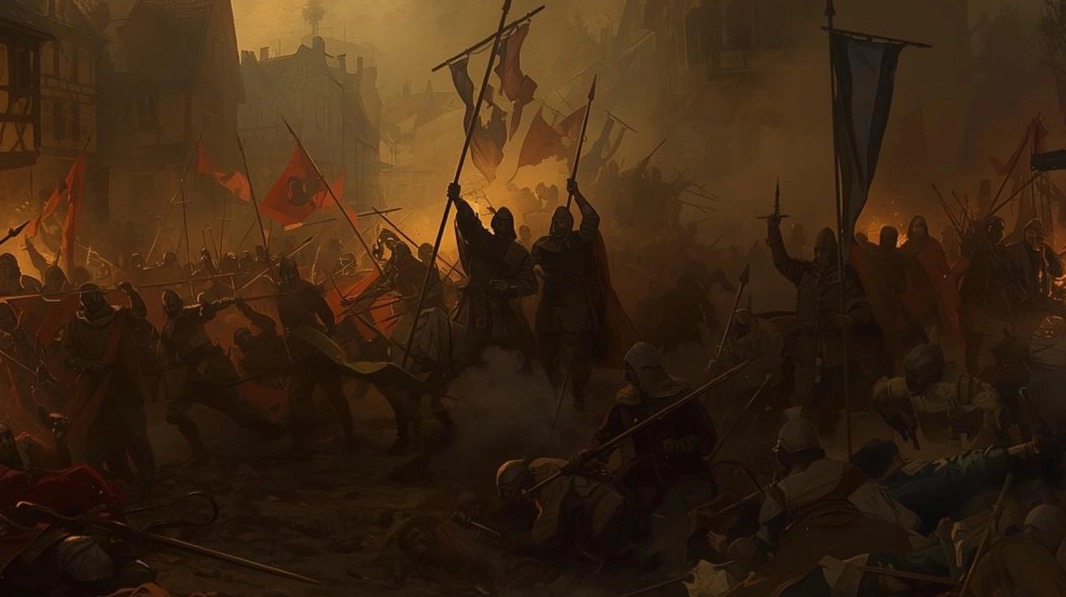
The legend reaches its final, unforgettable image during the Sendlinger Mordweihnacht—the Christmas massacre of 1705. Surrounded by fallen comrades, imperial troops advancing through the snow, the Schmied is said to have fought on alone, refusing surrender, until he was finally killed—still holding the flag
Sendlinger Mordweihnacht: History Behind the Myth
Behind the legend lies a documented historical catastrophe.
After the defeat of Elector Max Emanuel of Bavaria and his exile in 1704, Bavaria was occupied by Austrian (Habsburg) forces. For the rural population, this occupation brought heavy taxation, forced conscription, and widespread abuse of civilians. These pressures ignited unrest across Upper Bavaria. [br.de]
In December 1705, thousands of peasants marched toward Munich, hoping to liberate their land and restore Bavarian autonomy. Poorly armed and militarily inexperienced, they were nevertheless driven by desperation and a sense of betrayal.
On Christmas night, near Sendling, imperial troops surrounded the rebels. Despite negotiations and partial surrender, the peasants were slaughtered. The event entered history as the Sendlinger Mordweihnacht, one of the most traumatic episodes in Bavarian early modern history. [br.de]
It is within this massacre that the Schmied von Kochel takes on his enduring role—not as a confirmed individual, but as a symbolic focal point for collective grief, rage, and resistance.
The Historical Reality: A Legend Without a Biography
Modern historical research is remarkably clear on one point:
There is no solid evidence that the Schmied von Kochel existed as a single historical person. [de.wikipedia.org]
Scholars identify several possible inspirations:
- Balthasar Riesenberger, a documented blacksmith who fought and died at Sendling
- Balthasar Mayer, a real historical figure later woven into the legend
Neither, however, fully matches the legendary figure. Even the connection to Kochel am See is historically uncertain. Records suggest that the judicial district to which Kochel belonged did not directly participate in the uprising, reinforcing the idea that the Schmied is not tied to one village, but to the region’s shared memory. [de.wikipedia.org]
Crucially, historians agree that the Schmied figure was shaped and solidified in the 19th century, a period when Bavaria—like much of Europe—sought heroic narratives to transform historical defeat into moral meaning. The Schmied was not born of superstition, but of national trauma and narrative necessity