
Classification:
Architect of Fear · Mortal Revenant · Devourer of Guilt
Temperament: Cold, patient, sanctimonious
Threat Level: Catastrophic (Societal)
Matthew Hopkins was not a hunter of witches, but an architect of fear—proof that the most terrifying magic is the kind that convinces people they are righteous.
The Witchfinder does not look monstrous at first glance.
Matthew Hopkins is a creature born when morality becomes absolute and doubt is treated as heresy. He is not summoned by spell circles or ancient rites, but by collective panic and the desire to be innocent at any cost.
He is not remembered because he was powerful.
He is remembered because he was believed.
And belief, when sharpened, is the deadliest magic of all.
That is his most dangerous trait.
Matthew Hopkins appears as a tall, gaunt human figure, dressed in severe black garments—Puritan in cut, funereal in tone. His clothing bears no sigils, no arcane symbols, no trace of sorcery. Instead, he carries the tools of legitimacy: leather-bound books, written accusations, needles wrapped in cloth, and the weight of scripture spoken aloud.
His face is pale and sharp, with eyes that seem perpetually watchful, as if he is always observing something others cannot see—or desperately want to believe he can. Artists often describe his gaze as measuring, not cruel but meticulous, as though he is taking inventory of souls.
In stylized depictions, Hopkins is sometimes shown elongated beyond natural proportion, his shadow stretching far longer than his body, creeping across walls and water alike. Candles burn low around him, not because he commands darkness, but because fear consumes the air wherever he stands.
He does not carry a weapon.
He does not need one.d too long, a sign that the creature exists partially outside mundane reality (a later occult interpretation, not explicitly stated in folklore).

According to folklore, the Woipadinga is non‑aggressive and highly elusive, avoiding direct confrontation with humans whenever possible. It is characterized as a cautious observer rather than a hunter. [studyflix.de], [iamexpat.de]
Documented behavioral traits include:
- Crepuscular activity, appearing most often at dawn, dusk, or under full moon conditions
- A diet consisting primarily of herbs, roots, berries, fungi, and insects [studyflix.de]
- Defensive mechanisms involving foul‑smelling secretions, comparable to skunk spray, used only when threatened [studyflix.de], [iamexpat.de]
Some legends warn of unusual secondary effects following close contact, such as abnormal hair growth caused by the creature’s saliva, though these accounts remain within the realm of folklore and symbolic storytelling rather than documented phenomena
Habitat and Range
- Habitat
- Dense, old‑growth forests
- Alpine foothills and fog‑heavy valleys
- Areas untouched by modern roads or industry
- The creature is said to appear most often:
- During full moons
- At dawn or twilight
- In places where animals behave strangely or rituals were once performed
The Woipadinga is traditionally associated with:
- Dense forests of Bavaria and the Alpine foothills
- Remote woodland valleys and mountainous regions
- Areas characterized by low human settlement and persistent mist
Folklore places the creature firmly within Southern German landscapes, particularly Bavaria and Baden‑Württemberg, where stories of sightings have been passed down through oral tradition for generations.
Origins and Mythic Background
The story of Matthew Hopkins begins not with magic, but with permission.
In the mid‑17th century, England was tearing itself apart. King fought Parliament. Church fought conscience. Communities sought moral clarity in a world that no longer made sense.
Hopkins crowned himself Witchfinder General—a title with no legal foundation, yet immense symbolic power. Drawing on religious texts and cultural superstition, he offered a simple narrative:
Suffering has a cause. The cause has a face.
Between 1644 and 1647, this narrative killed hundreds.
In folkloric retellings, Hopkins ceases to be a man and becomes an embodiment: the living mechanism by which fear legitimizes itself. Later generations transformed him into a cautionary figure—a reminder that monsters do not always lurk outside the village.
Sometimes they are welcomed inside.
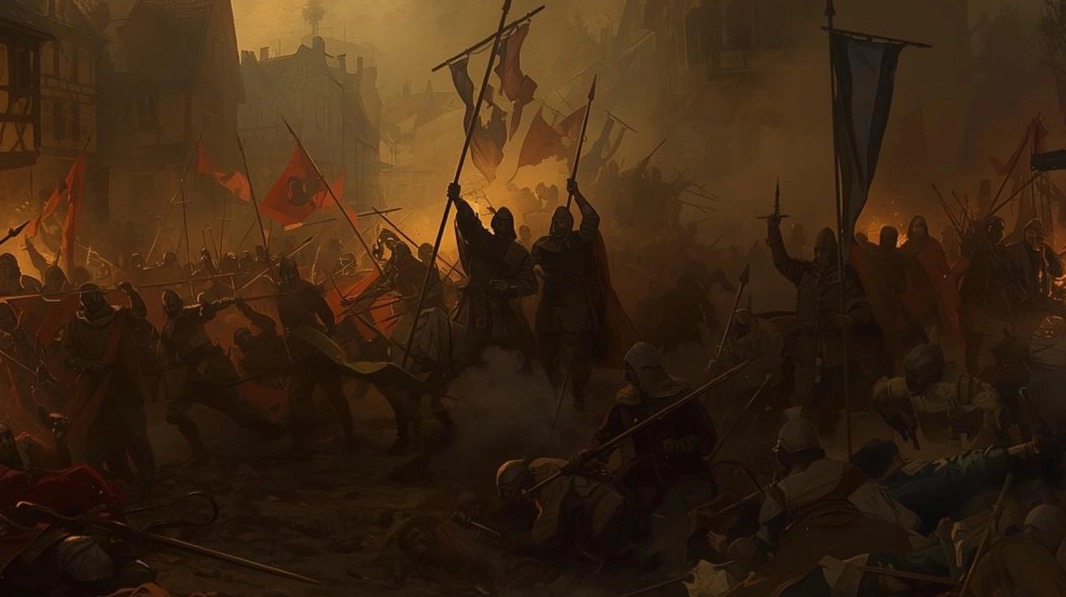
Origins and Mythic Background
The Woipadinga belongs to a family of Central European hybrid creatures, with its most direct folkloric counterpart being the Wolpertinger. The myth gained prominence during the 18th and 19th centuries, partially due to regional storytelling and the sale of fabricated specimens to travelers. [en.wikipedia.org], [iamexpat.de]
Folkloric explanations for its origin include:
- Improbable crossbreeding between forest animals
- Misinterpretations of diseased wildlife
- Deliberate folkloric exaggeration encouraged by local tradition
Later cultural interpretations—particularly in modern fantasy, gothic literature, and occult symbolism—reinterpret the Woipadinga as a liminal being, representing the breakdown of natural boundaries. While this symbolic role is not historically documented, it has become a common thematic adaptation rooted in the creature’s hybrid form and elusive behavior..
Why the Woipadinga Endures
Within Bavarian folklore, the Woipadinga serves as:
- A symbol of natural chaos and woodland mystery
- A cautionary tale for travelers who underestimate the forest
- A regional emblem of playful deception and myth‑making
Modern fantasy interpretations emphasize the creature’s role as a threshold guardian, a being tied to ancient forests that observes rather than intervenes—an interpretation inspired by, but not directly stated in, traditional sources.
The Schmied von Kochel is a forge‑born giant of memory—a blacksmith turned myth, who rose from fire and blood to give dignity to defeat and iron to remembrance. In the deep cultural memory of Bavaria, there stands a figure shaped not by certainty, but by fire, loss, and defiance.
He is known as the Schmied von Kochel—the Blacksmith of Kochel—a giant of a man said to have risen from forge and battlefield alike, carrying iron where others carried prayers. Whether he ever truly lived matters less than why he was remembered.
The Schmied is not a fairy tale spirit, nor a saint. He is something heavier:
a hero‑myth forged from trauma, created to give shape and dignity to defeat
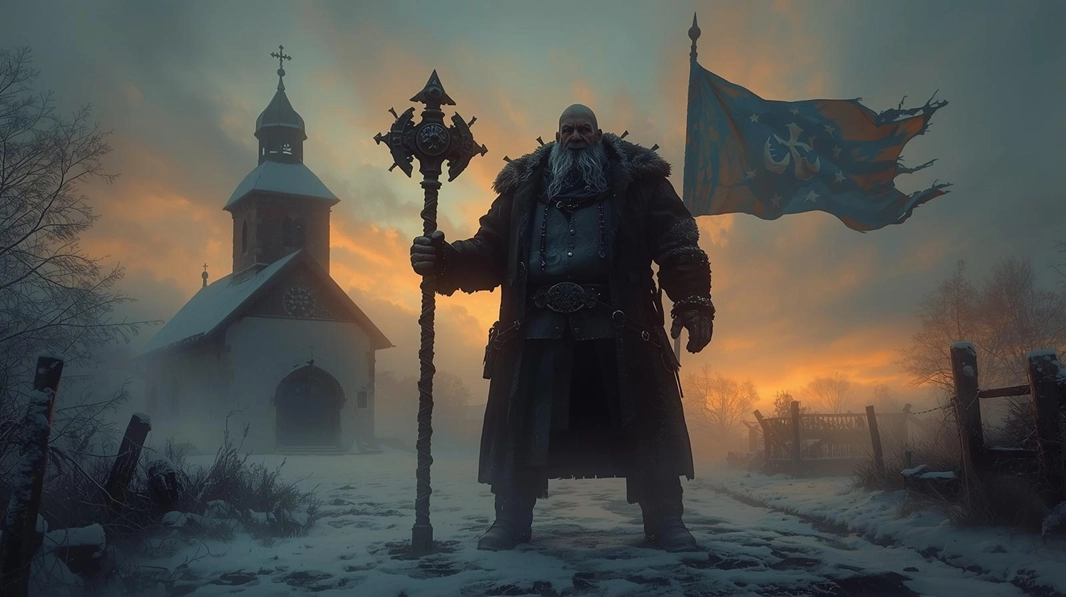
The Core Legend: The Blacksmith Who Would Not Fall
- Fought in the Turkish wars 1700
- Allegedly smashed open the gates of Belgrade using a metal bar
- Bavarian hardened warrior and craftsman
- leading figure in the Bavarian peasant uprising of 1705
- Carried a massive, nail‑studded club said to weigh (over 50 kg)
According to Upper Bavarian legend, the Schmied von Kochel was a blacksmith of immense physical power, often given the name Balthasar, described as almost giant‑like in stature and strength. Folk tradition casts him first as a soldier in the Great Turkish War of the late 17th century, where he allegedly fought against the Ottomans and earned a fearsome reputation.
One of the most persistent motifs tells that he smashed open the gates of Belgrade using nothing but an iron bar—an image that firmly anchors him in the mythic realm of superhuman strength rather than verifiable military history. After the wars, the legend says, he returned to Bavaria not merely as a veteran, but as something harder: a man reforged by violence, discipline, and iron. [de.wikipedia.org]
When Bavaria fell under Habsburg occupation during the War of the Spanish Succession, the Schmied re‑enters the story not as a soldier of empires, but as a man of the people. He becomes one of the symbolic leaders of the Bavarian peasant uprising of 1705, carrying a nail‑studded club said to weigh over a Zentner (more than 50 kilograms) and bearing the blue‑white Bavarian banner into battle. [de.wikipedia.org]
The legend reaches its final, unforgettable image during the Sendlinger Mordweihnacht—the Christmas massacre of 1705. Surrounded by fallen comrades, imperial troops advancing through the snow, the Schmied is said to have fought on alone, refusing surrender, until he was finally killed—still holding the flag
Sendlinger Mordweihnacht: History Behind the Myth
Behind the legend lies a documented historical catastrophe.
After the defeat of Elector Max Emanuel of Bavaria and his exile in 1704, Bavaria was occupied by Austrian (Habsburg) forces. For the rural population, this occupation brought heavy taxation, forced conscription, and widespread abuse of civilians. These pressures ignited unrest across Upper Bavaria. [br.de]
In December 1705, thousands of peasants marched toward Munich, hoping to liberate their land and restore Bavarian autonomy. Poorly armed and militarily inexperienced, they were nevertheless driven by desperation and a sense of betrayal.
On Christmas night, near Sendling, imperial troops surrounded the rebels. Despite negotiations and partial surrender, the peasants were slaughtered. The event entered history as the Sendlinger Mordweihnacht, one of the most traumatic episodes in Bavarian early modern history. [br.de]
It is within this massacre that the Schmied von Kochel takes on his enduring role—not as a confirmed individual, but as a symbolic focal point for collective grief, rage, and resistance.
The Historical Reality: A Legend Without a Biography
Modern historical research is remarkably clear on one point:
There is no solid evidence that the Schmied von Kochel existed as a single historical person. [de.wikipedia.org]
Scholars identify several possible inspirations:
- Balthasar Riesenberger, a documented blacksmith who fought and died at Sendling
- Balthasar Mayer, a real historical figure later woven into the legend
Neither, however, fully matches the legendary figure. Even the connection to Kochel am See is historically uncertain. Records suggest that the judicial district to which Kochel belonged did not directly participate in the uprising, reinforcing the idea that the Schmied is not tied to one village, but to the region’s shared memory. [de.wikipedia.org]
Crucially, historians agree that the Schmied figure was shaped and solidified in the 19th century, a period when Bavaria—like much of Europe—sought heroic narratives to transform historical defeat into moral meaning. The Schmied was not born of superstition, but of national trauma and narrative necessity