Between the drowning of Atlantis and the first trembling steps of recorded history, there lies a world shrouded in mist, blood, and forgotten gods. Its name is Hyboria.
For fantasy readers, PC gamers, and seekers of darker myth, Hyboria is not merely a setting—it is an echo of humanity’s primal soul. It is a world that feels ancient even when first discovered, as though it has always existed just beyond the edge of memory.

A Dreamlike City Suspended in Time
- Fought in the Turkish wars 1700
- Allegedly smashed open the gates of Belgrade using a metal bar
- Bavarian hardened warrior and craftsman
- leading figure in the Bavarian peasant uprising of 1705
- Carried a massive, nail‑studded club said to weigh (over 50 kg)
Hyboria is not another planet, nor a distant dimension. It is our own Earth, seen through the lens of a forgotten prehistoric age, long before recorded history began. According to its creator, the Hyborian Age takes place after the cataclysmic sinking of Atlantis and Lemuria, but before known ancient civilizations such as Sumer or Egypt. [en.wikipedia.org]
The continents of this era are vastly different in shape. A single immense landmass dominates the world, roughly corresponding to modern Europe, Asia, and Africa fused together, with inland seas such as the Vilayet Sea cutting into its heart. Familiar regions appear in distorted, mythic forms—Cimmeria where northern Europe might one day lie, Stygia echoing ancient Egypt, and eastern kingdoms foreshadowing Persia, India, and China. [lovecraft.fandom.com]
Hyboria exists in what scholars of fantasy often call a “vanished age”—a deliberate narrative space that allows myth, magic, and brutal realism to coexist without the constraints of strict historical timelines.
The Law of Ulthar: “No Man May Kill a Cat”
Behind the legend lies a documented historical catastrophe.
The world of Hyboria was invented by Robert E. Howard (1906–1936), the American writer best known as the creator of Conan the Cimmerian. Howard conceived the Hyborian Age in the early 1930s as a fictional prehistory designed to unify his sword‑and‑sorcery tales into a single coherent world. [en.wikipedia.org], [reh.world]
To achieve this, Howard wrote a detailed essay titled “The Hyborian Age”, outlining migrations, fallen civilizations, racial lineages, and catastrophic events that shaped the world. His goal was not academic accuracy, but mythic authenticity—a history that felt real, heavy with time and decay. [reh.world]
Howard deliberately avoided fixing the age to a precise date, though later scholars often place it around 10,000 BCE, at the end of the last Ice Age. This ambiguity reinforces Hyboria’s dreamlike quality: it is history remembered by instinct rather than by books.
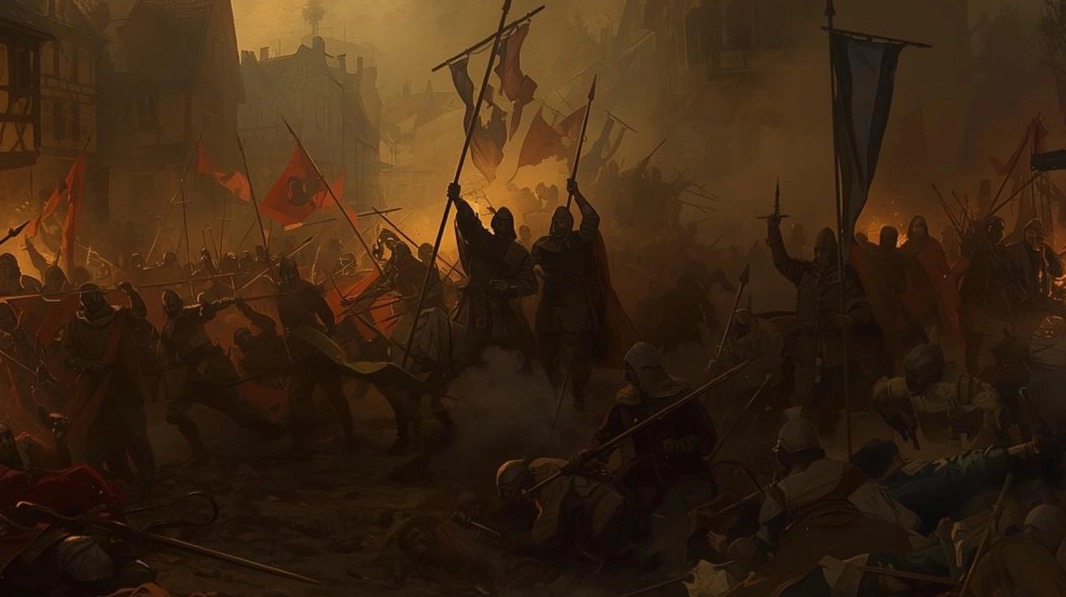
Ulthar and the Dreamlands
Hyboria is a land of extreme contrasts.
Snow‑choked northern mountains give way to primeval forests, haunted by barbarian tribes and ancient ruins. To the south stretch black deserts, steaming jungles, and cursed river valleys, where serpent cults and necromancers rule in the shadows. Inland seas glitter beside steppe lands roamed by horse‑warriors, while crumbling stone cities rise and fall with terrifying speed. [lovecraft.fandom.com]
Unlike many high‑fantasy worlds, Hyboria is entirely human‑dominated. There are no elves or dwarves. Instead, humanity appears in countless forms—Cimmerians, Stygians, Shemites, Picts—each shaped by climate, warfare, and belief. Cultural identity is sharp and often hostile, and borders are drawn in blood rather than ink. [hyboria.xoth.net]
Magic exists, but it is rare, dangerous, and corrupting. Sorcery is not a tool of heroes; it is the domain of priests, witches, and inhuman entities lurking beyond reality. Temples whisper at night. Ancient gods answer prayers—but always at a price.
What sets Hyboria apart is not just its geography or lore—it is its philosophy.
Hyboria is built on the idea that civilization is fragile. Empires rise quickly, rot from within, and collapse into dust, only to be replaced by younger, fiercer cultures. Howard portrays history as a brutal cycle: barbarism gives birth to civilization, which in turn decays and is destroyed by barbarism once more. [conan.com]
This worldview resonates deeply with gothic and occult audiences. There is no moral certainty in Hyboria—only strength, will, and fleeting moments of honor. The gods are distant or cruel. The past is littered with ruins older than memory. Humanity stands alone in a hostile cosmos, armed only with steel and stubborn defiance.
For modern fantasy fans and gamers, Hyboria feels raw and adult. It rejects idealism in favor of atmosphere, existential dread, and dark wonder. Its influence can be seen in grimdark fantasy, dark RPG settings, and games that emphasize survival, moral ambiguity, and ancient horror.